The British Army is changing more in the last 2 years than in the last 200! New Fitness tests and training based on Science from the University of Chichester, Women in ground close combat and the new integrated Virtus Equipment are changing the way the Army does business. This week at Bulletproofbodies, we have been tracing back to the originator of making Functional Movement popular, Paul Chek. We delivered a presentation on how the British Army has now changed to a Functional Movement Type of training and the fact that Women will be going into the Infantry for the first time in the history of the British Army.
This type of training has been championed from the CHEK Institute for the last 20 years.
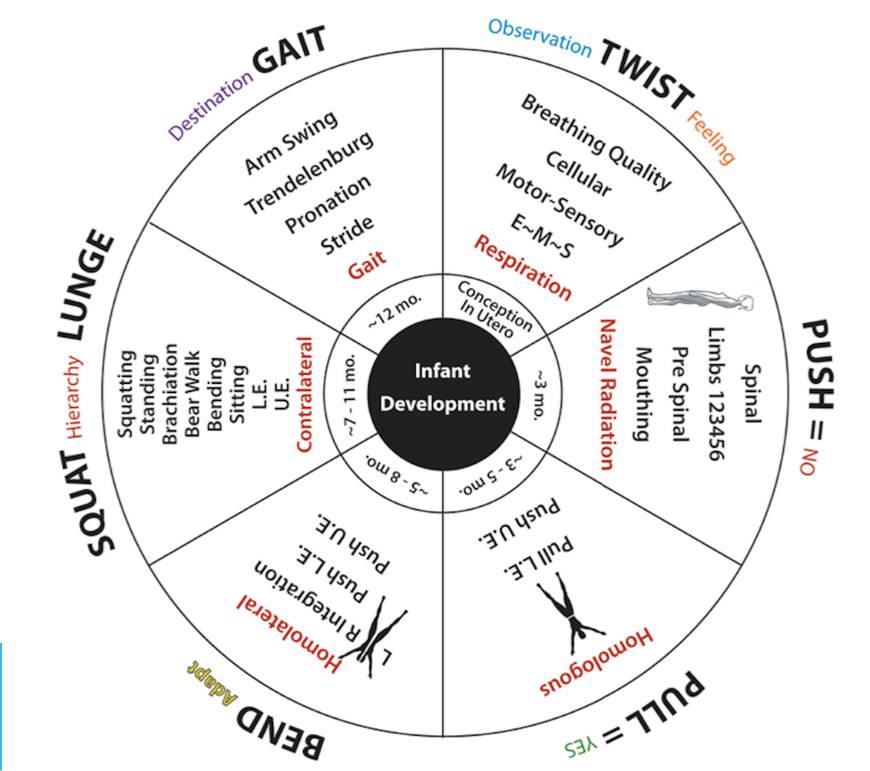
Training Functional Movements or as the CHEK Institute calls them, Primal Patterns is important in order to make sure you are training in all 3 planes of movement.
In addition, the Army is now emphasizing POWER training rather than just muscular endurance.
Now the British Army has changed not only its Physical Training Methods, but also its Personal Fitness Assessment.
Now known as PES Physical Employment Standards.
The 2 minutes of Press Ups, Sit Ups and 1.5 mile run are about to be changed forever!
Everything will be more functional and related to task specific fitness.
If you want to recover faster between Functional Movement training sessions, then use Compex:
Knees can hurt for many
reasons like overuse, underuse, overweight, falling on them, many reasons. It
is easy to tweak your knee when your body turns but your foot does not. And,
don't discount the repetitive knocks our knees get just in living a normal life.
Any and all of these can cause massive wear and tear on our knees.
One more thing that can
cause knee pain, uneven muscle strength between your quadriceps-the muscle
group on the front of your thigh-and your hamstrings-the muscle group on the
back of your thigh.
So, your knees hurt.
What can you do about it? If your knee pain is severe, see a doctor to find out
the extent of any wear and tear to the knee, whether any knee repair is
necessary. More than likely, if you are a candidate for surgery, the doctor
will have you do exercises to prepare for surgery anyway, so keep reading.
If your knee pain is
just an irritating, nagging type of knee pain, you may be able to resolve your
pain or at least improve your mobility through exercise. The purpose behind
these exercises is primarily to improve the strength and balance between the
two muscle groups: quadriceps and hamstrings.
Isometric knee
exercises
Isometric exercises are
static, or still, exercises. You do not use motion or weights, just static
muscle work holding the muscle in tension for a period of time. The two
isometric exercises that I describe here are called quad(ricep) sets and
ham(string) sets can be used for stability or as a warm-up for other exercises.
I like to use quad sets
and ham sets just for stability. One of my knees suffered an ACL (anterior
cruciate ligament) tear several years ago and I was able to avoid surgery,
largely due to these exercises. By the way, if you are a weekend jock and
intend to keep being a jock, you probably should go ahead with ACL repair if
you get a significant tear. You can only make it worse by playing hurt.
For either of these
exercises you can lie flat but you get more benefit if you are sitting up on a
relatively firm surface, propping up your upper body on your extended arms.
Quad sets
Seated on a firm
surface like an exercise mat or your bed, extend your legs out in front of you,
keeping them close together.
Flex your ankle so you
are pulling your toes up toward your knee
Tighten the tops of
your thighs. Imagine you have a ball under the back of your knee and you are
trying to squash it. If you have some discomfort doing this, roll up a
washcloth, place it under your knee, and squash it for real. It helps with the
visualization and gives you a sense of security.
Hold as tight as you
can for six seconds. Maintain normal breathing. Muscles need oxygen so
breathing is important.
Perform ten
repetitions.
Ham sets
Seated on a firm
surface like an exercise mat or your bed, extend your legs out in front of you,
ankles about shoulder width apart.
Bend your knees until
they are at least 6-to-10 inches off the exercise surface.
Flex your ankles,
pulling your toes up toward your knees.
Dig your heels into the
exercise surface as if you were trying to drag the surface with your heels up
to your buttocks. Don't allow your heels to move. Just pull against the surface
until you feel your hamstrings tighten and then hold.
Hold this position for
six seconds. Maintain normal breathing.
Perform ten
repetitions.
Isotonic exercises
Isotonic is the
opposite of isometric. You perform isotonic exercises in motion, moving through
a full or partial range using weights or some other form of resistance.
Sometime the exercise is a combination of isometric and isotonic, like doing
biceps curls with a dumbbell and then holding the flex static for a count of 30
on the last curl.
You can add ankle
weights to any of these exercises but I recommend practicing without weights
for a time or two, to educate your body to the motion before you add any
weight. I would also start with very little weight and build up.
Drakes
'Drakes' are so named
for the late Ducky Drake, a coach and trainer at UCLA who came up with these
exercises for his players.
Seated on a firm
surface like with your legs out in front of you, bend your left leg so that
your foot is next to your right knee. This is for stability.
Set your right quad for
a count of 2, tightening the quadriceps like in the Quad Set exercise.
Without losing the
tightness of the set, keeping your ankle flexed and leg straight, raise your
leg until your heel is 4 to 6 inches off the surface.
Set the quad even
tighter for a count of 2. Movement relaxes your muscle tension so you are
regaining any tension that was lost
Do not loosen the
tension in the quad and lower the leg to the surface.
Tighten the quad for a
count of 2 for the same reason as step 4.
Relax for a count of 2.
Ensure you relax the leg completely.
Perform three sets of
10 with at least a two-minute break between each set. In other words, rest your
right leg while you do the Drakes with your left leg.
One set of 10 will make
a difference in your life but if you want real strength and stability, you will
do three sets. If you are doing these therapeutically, you will do them a
couple of times a day.
Hamstring curls
If you do these using a
hamstring curl machine at the gym, pay special attention to steps 2 and 3.
Lying on your stomach
on a firm surface with your legs extended.
Flex your ankle so your
toe is pulled up as far as it can go.
Bend your right leg
bringing your heel up toward your buttocks. Do not allow the heel to go past
the line of the knee. You really don't want to force the knee capsule too far.
It is the same reason you don't allow your butt to go lower than your knees
when you are doing squats. When you bend your knee past 90°, the exercise does
not benefit the muscles and could create undue stress and unnecessary
stretching in the knee capsule.
Straighten your leg
again.
Rest and repeat for 3
sets of 10 repetitions.
Repeat on the other
side. Actually, with these, it is easiest to do 10 on one side and then 10 on
the other until you have done the 3 sets.
Short-arc Quads
For this exercise, you
need a firm padded roll under your knee that bends the knee at about 45°. I
filled a 3-pound coffee can with sand and taped the top on. Then I wrapped it
in a folded towel. That made it just about the right thickness and firmness for
short-arc quads.
Short-arc quads are
called that because you don't move the lower leg through its complete arc. You
do a short arc. If you work out at a gym, this is something you can do on the
quad machine as well, just go through the last 45° of arc on the machine.
Seated on a firm
surface like an exercise mat or your bed, bend your left leg so that your foot
is next to your right knee. This is for stability.
Place the roll under
your right knee.
Flex your right ankle
so that the toe is pulled up toward your knee.
Straighten your right
leg. Actually, a better way to do this exercise is to tighten your quadriceps,
almost like you were trying to squash the roll, until the leg straightens from
the shear effort of your push. It's a mental thing that gets better results
than just lifting your lower leg.
Do ten repetitions and
switch sides.
Do three sets of ten on
each leg.
Abductors and Adductors
Abduction moves your
limb out to the side, away from the midpoint of your body. So, the abductors of
your leg allow you to move your leg out and away from your body laterally, to
the side.
Adduction is a movement
that moves your limb to and across the midline of your body. So, the adductors
of your leg allow you to cross your legs.
If you were doing
anything like those awful tire exercises at football camp, you would need very
stable abductors counterbalanced by strong adductors.
FYI: most clinicians
use the terms A-B-duction and A-D-duction. This is so that they are clear which
muscles they are talking about. Yep, they sound out the first two letters when
talking about your A-B-ductors or A-D-ductors.
Abductor to-the-front
exercise
The abductors for your
leg, are all in the hip and thigh region, obviously, since the lower leg only
moves back and forward. Interestingly, only one major abductor muscle is in the
thigh while several more are in the pelvic cavity and one is on the hip.
These exercises,
therefore, are also good for strengthening and stabilizing the hip region. Your
hip, like your shoulder, is a ball-and-socket joint meaning it has circular
plane of motion while the knee itself is a simple hinge joint meaning it has
only the one plane of motion. To strengthen and stabilize the knee, you must
also have stability in your hip.
Lying on your left
side, bend your left knee up in front of you so that your left foot is under
your right knee. Brace yourself with your right hand and arm in front of you.
Straighten your right
leg and set the quad, flexing your ankle so that the toe is pulled up as far as
possible like in the Quad Set exercise.
Keeping your quad
firmly set and the outside of your foot parallel to the ceiling, use the
muscles of your hip and thigh to move your foot forward at a slant. Your foot
should start at just above the exercise mat or bed and end up at about 12-to-18
inches off the bed.
Return the foot to the
neutral position and relax the set.
Repeat 10 times.
Roll over and repeat
using the left leg.
Perform 2 sets of 10
each leg.
Note: Ensure you relax
between each rep. You still get some benefit if you don't but you will not get
the full benefit.
Abductor to-the-back
exercise
The reciprocal of the
front abductor exercise is the abductor back exercise. This is a more difficult
exercise if only because we don't make this motion often enough to have good
mobility in this direction. Pay attention to the instructions, especially the
extra information that points out where you can go wrong.
Lying on your left
side, bend your left knee up in front of you so that your left foot is under
your right knee. Brace yourself with your right hand and arm in front of you.
Straighten your right
leg and set the quad, flexing your ankle so that the toe is pulled up as far as
possible like in the Quad Set exercise.
Keeping the leg
straight, your quad set, and the side of your foot parallel to the ceiling, use
the muscles of your hip and thigh to move your foot back behind you at a slant.
Your foot should start at just above the exercise mat or bed and end up and end
up at about 12-to-18 inches off the bed. Try to avoid any motion of your upper
trunk. This gets easier as your condition improves.
Return the foot to the
neutral position and relax the set.
Repeat 10 times.
Roll over and repeat
using the left leg.
Perform 2 sets of 10
each leg.
Adductor exercises
Lying on your right
side, bend your left knee and flare your leg out so that your left foot is
tucked behind your right knee. Brace yourself with your left hand and arm in
front of you. Note: I have also seen this with the left leg bent up in front of
the right knee. You should experiment.
Straighten your right
leg and set the quad, flexing your ankle so that the toe is pulled up as far as
possible like in the Quad Set exercise.
Lift you right leg off
the exercise surface about six inches, keeping your inner ankle pointed at the
ceiling.
Repeat 10 times.
Roll over and repeat
for the left leg.
Toe press ups
Toe press-ups are a
stability exercise. You can do them sitting or standing. I personally prefer
sitting until I know that the knee capsule is strong enough to handle any
missteps.
In case you doubt the
efficacy of toe presses for knee stability, grab your knee just above the
kneecap so that your thumb is on the inside of your thigh and your fingers on
the outside. Do the exercise. Can you feel the muscle action that is required
to perform a toe press? Amazing, isn't it?
Standing toe press ups
Place the balls of your
feet on the edge of a rise or step. Ensure you have good support in case you
slip. A stairway with two handrails is good, a much shorter rise of 1-to-2
inches is better.
Straighten your legs
and set your quads like in the Quad Set exercise.
Using ankle action and
a lot of calf muscle, rise up onto the balls of your feet.
Maintaining control,
lower your feet again allowing the heels to fall below the level of the step or
riser.
Repeat steps 4 and 5
for 20 repetitions.
Sitting toe press up
using a leg press exercise machine
Place the balls of your
feet on the bottom edge of the leg press foot plate. Do yourself a favor and
set the weights to the lightest resistance. See how you feel the next day
before increasing the weights.
Straighten your legs
and set your quads like in the Quad Set exercise.
Using ankle action and
a lot of calf muscle, press the plate away from your body.
Maintaining control,
flex your ankles allowing the press to pass the heels.
Repeat steps 4 and 5
for 20 repetitions.
Sitting toe press up
using a stretchy strap or tube
Sitting comfortably on
any surface, place the ball of one foot in the center of the stretchy strap
(elastic bands) or tube (Theratube).
Straighten your leg and
set your quad like in the Quad Set exercise.
Using ankle action and
a lot of calf muscle, point the toe away from your body.
Maintaining control,
flex your ankle allowing the toe to flex past your heel.
Repeat steps 4 and 5
for 20 repetitions on each leg.
I have seen people do
both legs with the stretchy device but it can force the ankles to roll in and
actually create instability and pain so best you do one leg at a time with the
stretchy stuff.
At Old Back Magic
[http://oldbackmagic.com/], we don't just care about backs. We work with the
whole body to provide strength and stability to the back. Knee exercises are
only some of the exercises you can get from the Old Back Magic Back School Blog
[http://oldbackmagic.com/backschool].
It isn't rocket science
or a strange secret society, functional movement, functional training, you do
functional movement everyday without thinking about it.
The term functional
training was coined when trainers happened upon a concept used by
Physiotherapists and rehabilitation trainers was used by them to describe and
retrain people to go about or improve their daily tasks/lives. Since then it
has evolved in many ways and forms and be used in every aspect of the fitness
industry from personal trainers to strength coaches. The various forms are vast
and varied and who is to say what or which one is right or wrong, the common
denominator is that all methods agree on the improvement of a person or athlete
in or on all planes of human movement; whether this be the retraining of a
stroke victim to walk or an athlete to re balance instabilities in a movement
the goal is the same FUNCTIONAL MOVEMENT improves all aspects of movement (if
trained correctly)
The dictionary defines
functional training for sport as
Functional training for
sports
Functional training may
lead to better muscular balance and joint stability, possibly decreasing the
number of injuries sustained in an individual's performance in a sport The
benefits may arise from the use of training that emphasizes the body's natural
ability to move in six degrees of freedom. In comparison, though machines
appear to be safer to use, they restrict movements to a single plane of motion,
which is an unnatural form of movement for the body and may potentially lead to
faulty movement patterns or injury.
In 2009 Spennewyn
conducted research, published in the Journal of Strength and Conditioning
Research which compared functional training to fixed variable training
techniques; this was considered the first research of its type comparing the
two methods of strength training. Results of the study showed very substantial
gains and benefits in the functional training group over fixed training
equipment. Functional users had a 58% greater increase in strength over the
fixed-form group. Their improvements in balance were 196% higher over fixed and
reported an overall decrease in joint pain by 30%.
In addition, a recent
study of the effectiveness of sandbag training on athletic conditioning, found
that training with a variable load has significant cardiovascular benefits over
conventional methods. The study compared subjects doing exercise with a
sandbag, a kettlebell and battle ropes for 5:44 seconds each. The study
concluded that sandbag training burned 24% more calories over the other
methods.
Consideration when
implementing a functional programme This can go either way dependent on many
factors inclusive of your experience, knowledge and understanding of the
concept. One key factor to consider when implementing a programme for an
athlete or the general public is every session is an EVALUATION, from the
minute they walk through the door to the minute they disappear from view.
Other key factors for
consideration are
• Plan
• Management timing in
relation to the plan
• Liaison with other
agencies involved with the athlete
• Define objectives
• Clearly defined
executions of delivery for said objectives
• Always work efficiently
and effectively (quality before quantity)
• Workouts should be
creative and challenging
• EDIPP principle is
paramount in delivery
• Both athlete and
coach must be prepared for the long haul
• Consistency within
the programme (one step at a time) e.g each session should concentrate on one
aim not multiple goals
• Play as you train,
train as you play, remember competition is the outcome of training
other factors can
affect your plan and also need to be considered especially in relation to
performance factors.
Sports performance
factors
1. Power
2. Strength
3. Speed
4. Coordination
5. Flexibility
6. Quickness
7. Muscular endurance
8. Cardio capacity and
endurance
However firstly it is
important that you understand the needs of the sport, you may not be familiar
with a sport or at least not all of the demands for the sport. Most sports can
be broken down into four basic categories
• Sprint
• Intermittent sprint
• Transitional
• Endurance
Thereafter you need to
look at the athlete
o Understand their
position within the sport
o Analyse the qualities
of the athlete
o Understand the most
common injuries to the sport
o Impact factors on the
athlete and injuries
Hopefully this article
will allow you to understand a little more about the need for sports
functionality.
I
started off my Functional Movement journey whilst I was still serving as a
Physiotherapist in the Royal Army Medical Corps.
Working with the Military elite we used FMS as an
early warning detection system as part of a comprehensive injury surveillance
system that was proactive rather than reactive.
The FMS involves seven movement challenges that
represent normal functional movements:
1. Deep Squat
2. Hurdle Step
3. In-Line Lunge
4. Shoulder Mobility
5. Active Straight Leg Raise
6. Trunk Stability Push Up
7. Rotatory Stability
The overhead squat is used to determine range of
movement in the shoulders, thoracic spine, hips, knees and ankles. It also
tests motor control in symmetrical stance.
The Hurdle Step is
designed to test range of movement and motor control in
single leg stance with
weight transfer over an obstacle
The In-Line Lunge
tests your ability to stabilise in an asymmetrical foot stance.
This
test is more challenging to stay balanced in -line and maintain an upright
torso.
The FMS gives you a score out of 21;
0 = Pain
1 = Dysfunctional Movement
2 = Normal Movement
3 = Optimal Movement
The top score of the day was by a mature athlete who was inappropriately dressed and still made it look easy!
Check out the FMS website and get your movement checked today: