This week the legend that is Paul Chek released a Podcast with Bulletproofbodies co-founder Dale Walker on Living 4D with Paul Chek:
https://chekinstitute.com/podcast/
Paul and Dale got into all sorts of topics from Eugene Sandow to Therapists performing rectal trigger points, from Women in the Infantry to CrossFit.
Dale met Paul back in 2001 at Fit Pro in the UK when the Chek Institute had the old logo:
No-one at that conference was talking on his level.
In 2019, no-one is still talking on his level.
Dale is a student at the CHEK Institute in the UK.
Dale has integrated Paul's Primal Patterns into teaching Exercise Prescription at the University of Salford in the UK.
Dale also work with CrossFit athletes from all different levels including the boy wonder Reece Mitchell (watch out for him at the CrossFit Games 2019).
Don't forget to download a FREE copy of Don't get Cross get Fit:
The British Army is changing more in the last 2 years than in the last 200! New Fitness tests and training based on Science from the University of Chichester, Women in ground close combat and the new integrated Virtus Equipment are changing the way the Army does business. This week at Bulletproofbodies, we have been tracing back to the originator of making Functional Movement popular, Paul Chek. We delivered a presentation on how the British Army has now changed to a Functional Movement Type of training and the fact that Women will be going into the Infantry for the first time in the history of the British Army.
This type of training has been championed from the CHEK Institute for the last 20 years.
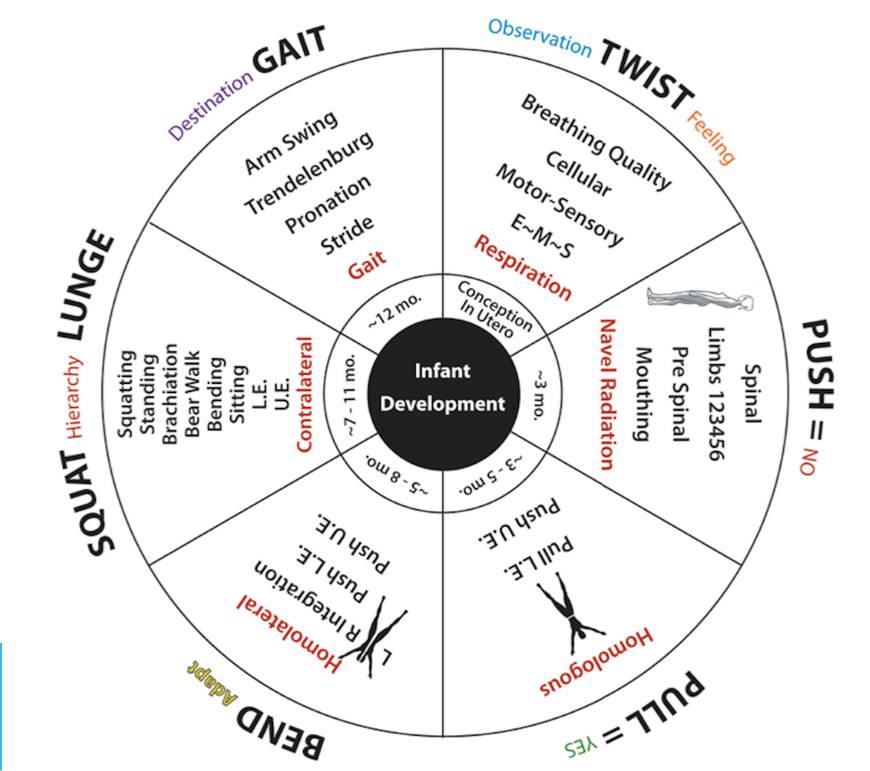
Training Functional Movements or as the CHEK Institute calls them, Primal Patterns is important in order to make sure you are training in all 3 planes of movement.
In addition, the Army is now emphasizing POWER training rather than just muscular endurance.
Now the British Army has changed not only its Physical Training Methods, but also its Personal Fitness Assessment.
Now known as PES Physical Employment Standards.
The 2 minutes of Press Ups, Sit Ups and 1.5 mile run are about to be changed forever!
Everything will be more functional and related to task specific fitness.
If you want to recover faster between Functional Movement training sessions, then use Compex:
If you want to get fit,
then start with your thoughts!
This may sound a bit strange but mental health is the first of the CHEK Holistic lifestyle principles.
The average person has
80,000 thoughts per day. Of those
thoughts, 80% of them are negative. We can control the "health" of our thoughts through practice. We must train our minds as well as our bodies.
Meditation is a great way to do this. However, if you are a Physically Active, get things done person you are less likely to spend your time, "doing nothing." But, for busy and physically active people, it is we who could benefit the most from this.
The CHEK principles:
1. Thoughts / Emotions
2. Breathing habits
3. Hydration
4. Food
5. Sleep
6. Exercise
Join Matt and Paul for
their Webinar this Thursday 28th June:
Paul Chek and Matt
Wallden have released a new paper on:
– Is musculoskeletal medicine lacking soul? If you are on the Bulletproofbodies mailing list you will already have access to this paper. However, if you are not on the list make sure you sign up today:
There is some information in this paper that really challenges the Biomechanical model of pain. The pain teacher makes you aware of the choices you are making.
Unconscious behaviours become conscious.
No pain, No gain (Outdated)
Work hard, Rest Hard (Updated)
Join Matt and Paul for
their Webinar this Thursday 28th June:
The Human Longevity
Project is an upcoming documentary film series that will take you on an
exciting journey around the globe, on a mission to discover the secrets of the
longest-lived and healthiest populations on Earth.
Filmed over 2 years, in
over 50 locations, in 9 countries, on 3 continents, this film will uncover the
key lifestyle, environmental, and physiological components to avoid chronic
disease, increase health span, and put the brakes on aging in our modern world.
Featuring interviews
from premier scientists, physicians, healers, and health experts – along with
real-world footage from around the globe, we examined the daily routines and
lifestyle practices that range from preconception to geriatrics, with much more
observational and scientific scrutiny than ever before. We will scientifically
demonstrate the recipe of a long, healthy life – and how to apply these lessons
in our modern environment.
At a time when
populations of industrialized societies are seeing collective health, quality
of life, and the health of the environment decline rapidly, the scientific
information and lifestyle practices highlighted in this documentary are
absolutely essential to reversing these recent trends and shifting the entire
paradigm of chronic disease and destruction of the environment.
In the last 70 years,
the modern world has taken a turn for the worse. Our food, water, air, and soil
have been decimated by toxic chemicals and metals. Our atmosphere is blanketed
in electromagnetic radiation. Chronic mental and emotional stress has become
the norm – and our society is fixated on the technological connection while
authentic community dissolves.
Last week in Austin,
Texas, the world’s biggest Paleo conference was held.
Heal yourself, Change the World.
What is Paleo?
Paleo is a way of eating that truly goes back to basics, Paleolithic diets are all
about eating like our ancestors did.
While you may not be inclined or even
required to chase down a wildebeest, Paleo fans aim to eat as
naturally as possible, opting for grass-fed meats, an abundance of fruit and
veg and other wholefoods like nuts and seeds.
Some relaxed versions of the diet
allow taboo foods (that were not necessarily available during that era) like
low-fat dairy products and potatoes, while others shun even fruit or veg
that is considered to contain too much fructose.
Paleolithic living as a dietary concept was first promoted by
gastroenterologist, Dr Walter L Voegtlin.
His book, The Stone Age diet, was
published in 1975 and paved the way for a plethora of different Paleolithic
approaches, all similar in their core principles but with varying rules and
restrictions.
Common terms for these types of diet include the caveman diet,
the hunter-gatherer diet and of course, the Paleo diet.
Paleo F(x) 2018
The topics included:
Paleo
Ancestral Health
Keto
Functional Medicine
&
Strength &
Conditioning
Paul Chek was one of
the key note speakers.
Check out what Paul has to say in the Video above:
Paul Chek has been teaching this for years. Let us look at how the abdominals really work and get away from this isolationist exercise ideology by returning to function.
Crunches are probably
the single most misunderstood and abused exercise in the entire fitness
industry. Somewhere along the way, people realized that if they squeeze their
midsection together they will end up 'feeling it' in their 'abs' and some how
they equate this to having a flat stomach or mid section.
In the case of doing
crunches for a flat stomach and showing off your abs we can just throw logic
right out the window. Trainers and many people who know better still ignore the
most basic principles of anatomy and physiology all in the quest for a flat
stomach.
Here are the facts:
1) Crunches will
provide stimulus for your abs to get stronger and probably grow. (yes that's
right, if you do enough of them and do them intensely they will grow) A crunch
is basically a weight training exercise for your abs, the same basic idea as
doing a bicep curl. You are working the muscle, which will eventually make it
stronger and make it grow. But for some reason people think that a crunch will
burn the fat off their stomachs and keep the muscles there small and compact.
2) You cannot spot
reduce fat. In other words, working a specific muscle does not burn the fat
around that muscle. Your body burns fat systematically all over, not just on
one place. For example: if you did 100 bicep curls every day on your left arm,
you would end up with a muscular left arm, but your left arm would have just as
much fat as your right arm, same deal with crunches. If you do 500 crunches
every day, you will just have bigger stronger abs, but all the fat you always
had around them will still be there unless you adjust your diet and the rest of
your daily activity and workout schedule to lose fat.
This last point is
probably the single most misunderstood point of all. People continue to do
crunches thinking they will reduce the fat around their mid section and
stomach.
3) Crunches may not be
the safest exercise for your spine and lower back. A growing body of research
shows that a crunch is in fact one of the worst positions you can put your
spine in. Most fitness professionals and so called 'experts' do not have any formal
biomechanics research training. Therefore they are most unaware of the science
behind the shape, structure and function of the abdominal oblique, and lower
back muscles. If they did they would definitely think twice about doing or
recommending anyone to do a crunch.
Colleagues of mine are
doing research on spinal and lower back injuries. And in their lab the only way
they can guarantee to herniate a spinal disc is to put a test spine into a
severe crunch! Yes, a crunch! The exact same position people put themselves in
hundreds of times every workout. In reality the abdominal muscles are not meant
to pull your body into a forceful curling or crunching position. They are meant
to stabilize your trunk or "core" as it is being called now. In other
words they are meant to simply hold your core in place as your arms and legs
move and do work such as running, jumping, throwing and the like. All of these
motions will work your abs without forcing you into the potentially dangerous
position of a crunch.
So how do you get a 6
pack without doing crunches?
Simple, eat less food,
and burn more calories. Being able to see a well defined 6 pack has nothing to
do with doing any sort of ab exercises. It has everything to do with burning
fat. As soon as you strip away enough fat you will eventually see that you
already have a nicely formed set of abs. As you have been developing them your
whole life every time you stand up walk, run, jump, and every other form of
activity you can think of.
If you feel like you
need to work on your abs, avoid crunches and do exercises that work them in a
pattern that they are meant to be used in. Such as planks, side planks,
stability ball roll outs, planks on a stability ball, all forms of push ups and
modified push ups, medicine ball throwing, sprinting, swimming. There is more,
but I think you're getting the picture. Incidentally all of these exercise will
work the muscles of your core in a balanced manner (unlike crunches which do
not work your oblique or your lower back muscles).
Even though crunches
will work your abs to some degree there is good evidence to show that this is
by no means the best or the safest way to work them. The associated risk to
your lower back in most people's case should outweigh any benefit they think
they are getting by working their abs in this way. Each person should weigh the
risk and reward of doing crunches for the sake of having bigger stronger abs,
and the risk of injury and chronic pain and problems with their lower back. And
lets make no mistake about it, crunches never have and never will give you a
flat stomach or cause you to lose fat off of your midsection.
John Barban is a
Varsity Strength and Conditioning Coach and has his Masters degree in
Nutrition. He is the author of a womens specific workout called the 6 Minute
Circuits Workout you can find at [http://www.6minuteCircuits.com] He is also
the performance Training Advisor to a womens exercise and nutrtion resource
[http://www.grrlathlete.com] Ask John questions directly at the grrlathlete forum
http://www.grrlathlete.freeforums.org