Last weekend the
Bulletproofbodies Team had the pleasure of studying with a true pioneer in Physiotherapy, Professor Dr
Jeremy Lewis.
Jeremy is a Physio that specializes in the Shoulder and has published extensively in the literature, he
is also the Editor of Grieve’s Modern Musculoskeletal Physiotherapy.
The Bio-Psycho-Social
approach has long been used in Physiotherapy and it is the exact opposite of
the Bio-medical model.
The bio-medical model
is the belief that the pain is coming from noxious “issues in the tissues.”
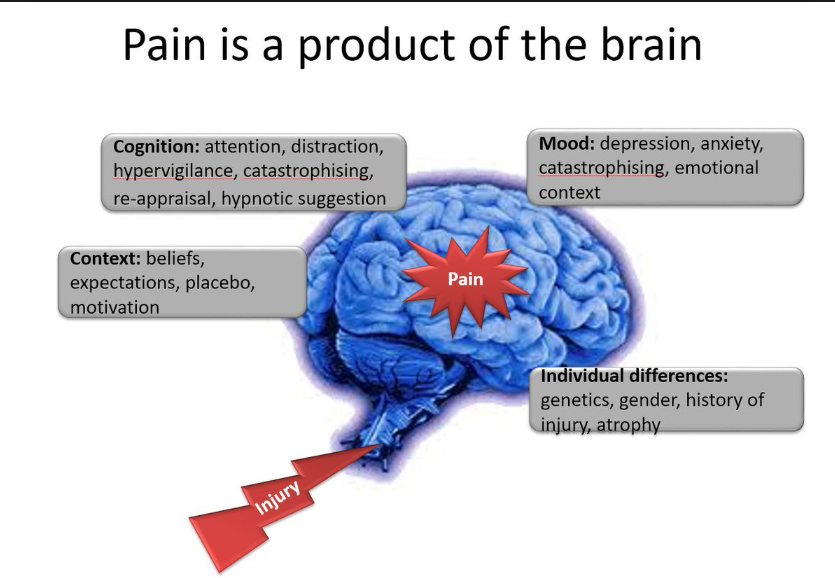
The Biopsychosocial
approach is different and is influenced by the NEW Pain Science, where we now
know that “Pain is in the brain.”
Jeremy has simplified shoulder issues into the following:
The diagnosis of a
painful shoulder has been divided into 4 inter-related categories:
Not a Shoulder
Weak and Painful
Stiff and Painful
Unstable "Wobbly"
With 4 pre-disposing factors:
Psychosocial
Biomechanics
Lifestyle
Kinetic Chain
The evidence for Exercises
prescribed by a Physiotherapist are as good as Surgery for the shoulder.
Physio is not "second best" treatment, but should be first line treatment, before surgery is considered (in a number of non-trauma cases).
This means that Physio can significantly reduce the number of surgeries on an already over-burdened NHS service.
The group of muscles
collectively know as the rotator cuff are vital to shoulder function. Problems
with any of these muscles can cause pain and dysfunction in the shoulder. But
what exactly is the "rotator cuff" and what does it do? More
importantly, what is the best way to keep it strong and pain-free? These are
the questions that this article will address.
Rotator Cuff Anatomy
Let's briefly review
the anatomy of the four rotator cuff muscles:
Supraspinatus. This
muscle originates from the top of the shoulder blade and inserts into the back of
the shoulder bone. It is classified as an abductor of the shoulder, that means
it helps raise your arm to the side.
Infraspinatus. This
muscle originates from the back of your shoulder blade to the back of your
shoulder bone. It is the second largest rotator cuff muscle and is classified
as an external rotator of the shoulder.
Teres Minor. This
muscle originates from the back of the shoulder blade and inserts on the back
of the shoulder bone. It is classified as an external rotator of the shoulder.
Subscapularis. This
muscle originates from the front of the shoulder blade and inserts on the front
of the shoulder bone. It is the largest rotator cuff muscle and is classified
as an internal rotator of the shoulder.
An easy way to remember
the name of the muscles is the acronym SITS:
Supraspinatus,
Infraspinatus, Teres minor, and Subscapularis.
True Function of the
Rotator Cuff
Although these muscles
are classified as external rotators, an internal rotators, and an abductor,
this is only true from a purely kinesiological perspective. In other words,
this is how the muscles work in isolation but not in functional movements such as
throwing a baseball or reaching for an object off a high shelf.
The functional role of
the cuff is to provide dynamic stability to the shoulder during movement. This
is accomplished by all four muscles pulling the head of the humerus into the
shoulder socket whenever you move your arm. Shoulder impingement and rotator
cuff tears can result if theses muscles aren't working properly or if you have
bad mechanics at the shoulder joint.
Shoulder Impingement
and Rotator Cuff Tears
I've got some
interesting news for you: you may have or be on your way to having shoulder
problems and not even know it. In a study by Sher et al., MRIs were taken of 96
asymptomatic (without pain) adults and it was found that 34% of them had
rotator cuff tears with 54% of them found in adults over 60 (participant's ages
were from 19 to over 60 years old).
There are most likely
many reasons for this. One important reason is there is a part of the cuff that
has no blood supply. Research shows that this area gets larger as we get older
and is a normal part of aging. However, this makes injury more likely and
decreases your chances for healing.
This means that if you
start having rotator cuff symptoms, you might be on your way to tearing your
cuff. Problems with the cuff problems are usually progressive. The progression
is as follows:
Irritation-->Inflammation-->Fraying-->Tearing
Here's the solution:
start using rotator cuff exercises in your program. Getting stronger and
building endurance is the key here. The stronger you are, the less strength you
are using during any activity.
Rotator Cuff Exercises
So you know you should
be training your cuff muscles whether you're injured or not, but what is the
best exercises to start with? Research on 7 different exercises determined that
side-lying external rotations was the most effective exercise and external
rotations at 90 degrees of shoulder abduction was the second most effective
exercise. I recommend that you start with side-lying external rotations. You
can eventually progress to external rotations at 90 degrees this exercise is
technically more difficult and may cause problems with shoulders with poor
mechanics.
--To perform side-lying
external rotations, lay on your side with good alignment of your spine. Keep
your arm at your side with your elbow bent to 90 degrees while holding a
dumbbell. Slowly rotate your away from your body then slowly lower it back to
the starting position.
Here's what I recommend
for a beginning strengthening program:
1-2 sets of 10-15
repetitions before upper body exercise.
1-2 sets of 10-15
repetitions 4 times per week.
Keep in mind that if
you use too much weight, you're not working the right muscles and if you
overwork your rotator cuff, you cause these muscles to get too tired and they
can't do their job!
Ted Ryce is a Miami
Beach Personal Trainer who specializes in corrective exercise and post
rehabilitation.
Visit my website for
more information on Exercises for Injuries and Personal Training In Miami
Beach.