Last weekend the
Bulletproofbodies Team had the pleasure of studying with a true pioneer in Physiotherapy, Professor Dr
Jeremy Lewis.
Jeremy is a Physio that specializes in the Shoulder and has published extensively in the literature, he
is also the Editor of Grieve’s Modern Musculoskeletal Physiotherapy.
The Bio-Psycho-Social
approach has long been used in Physiotherapy and it is the exact opposite of
the Bio-medical model.
The bio-medical model
is the belief that the pain is coming from noxious “issues in the tissues.”
The Biopsychosocial
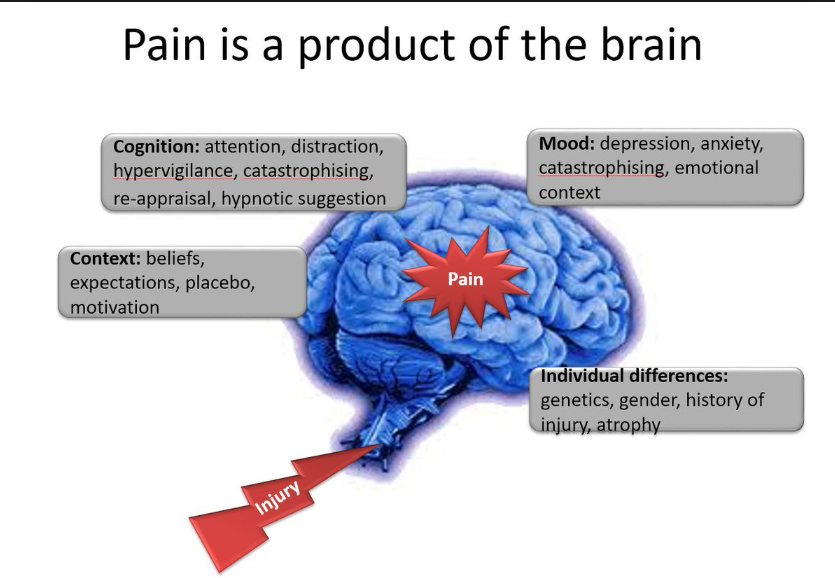
approach is different and is influenced by the NEW Pain Science, where we now
know that “Pain is in the brain.”
Jeremy has simplified shoulder issues into the following:
The diagnosis of a
painful shoulder has been divided into 4 inter-related categories:
Not a Shoulder
Weak and Painful
Stiff and Painful
Unstable "Wobbly"
With 4 pre-disposing factors:
Psychosocial
Biomechanics
Lifestyle
Kinetic Chain
The evidence for Exercises
prescribed by a Physiotherapist are as good as Surgery for the shoulder.
Physio is not "second best" treatment, but should be first line treatment, before surgery is considered (in a number of non-trauma cases).
This means that Physio can significantly reduce the number of surgeries on an already over-burdened NHS service.
The group of muscles
collectively know as the rotator cuff are vital to shoulder function. Problems
with any of these muscles can cause pain and dysfunction in the shoulder. But
what exactly is the "rotator cuff" and what does it do? More
importantly, what is the best way to keep it strong and pain-free? These are
the questions that this article will address.
Rotator Cuff Anatomy
Let's briefly review
the anatomy of the four rotator cuff muscles:
Supraspinatus. This
muscle originates from the top of the shoulder blade and inserts into the back of
the shoulder bone. It is classified as an abductor of the shoulder, that means
it helps raise your arm to the side.
Infraspinatus. This
muscle originates from the back of your shoulder blade to the back of your
shoulder bone. It is the second largest rotator cuff muscle and is classified
as an external rotator of the shoulder.
Teres Minor. This
muscle originates from the back of the shoulder blade and inserts on the back
of the shoulder bone. It is classified as an external rotator of the shoulder.
Subscapularis. This
muscle originates from the front of the shoulder blade and inserts on the front
of the shoulder bone. It is the largest rotator cuff muscle and is classified
as an internal rotator of the shoulder.
An easy way to remember
the name of the muscles is the acronym SITS:
Supraspinatus,
Infraspinatus, Teres minor, and Subscapularis.
True Function of the
Rotator Cuff
Although these muscles
are classified as external rotators, an internal rotators, and an abductor,
this is only true from a purely kinesiological perspective. In other words,
this is how the muscles work in isolation but not in functional movements such as
throwing a baseball or reaching for an object off a high shelf.
The functional role of
the cuff is to provide dynamic stability to the shoulder during movement. This
is accomplished by all four muscles pulling the head of the humerus into the
shoulder socket whenever you move your arm. Shoulder impingement and rotator
cuff tears can result if theses muscles aren't working properly or if you have
bad mechanics at the shoulder joint.
Shoulder Impingement
and Rotator Cuff Tears
I've got some
interesting news for you: you may have or be on your way to having shoulder
problems and not even know it. In a study by Sher et al., MRIs were taken of 96
asymptomatic (without pain) adults and it was found that 34% of them had
rotator cuff tears with 54% of them found in adults over 60 (participant's ages
were from 19 to over 60 years old).
There are most likely
many reasons for this. One important reason is there is a part of the cuff that
has no blood supply. Research shows that this area gets larger as we get older
and is a normal part of aging. However, this makes injury more likely and
decreases your chances for healing.
This means that if you
start having rotator cuff symptoms, you might be on your way to tearing your
cuff. Problems with the cuff problems are usually progressive. The progression
is as follows:
Irritation-->Inflammation-->Fraying-->Tearing
Here's the solution:
start using rotator cuff exercises in your program. Getting stronger and
building endurance is the key here. The stronger you are, the less strength you
are using during any activity.
Rotator Cuff Exercises
So you know you should
be training your cuff muscles whether you're injured or not, but what is the
best exercises to start with? Research on 7 different exercises determined that
side-lying external rotations was the most effective exercise and external
rotations at 90 degrees of shoulder abduction was the second most effective
exercise. I recommend that you start with side-lying external rotations. You
can eventually progress to external rotations at 90 degrees this exercise is
technically more difficult and may cause problems with shoulders with poor
mechanics.
--To perform side-lying
external rotations, lay on your side with good alignment of your spine. Keep
your arm at your side with your elbow bent to 90 degrees while holding a
dumbbell. Slowly rotate your away from your body then slowly lower it back to
the starting position.
Here's what I recommend
for a beginning strengthening program:
1-2 sets of 10-15
repetitions before upper body exercise.
1-2 sets of 10-15
repetitions 4 times per week.
Keep in mind that if
you use too much weight, you're not working the right muscles and if you
overwork your rotator cuff, you cause these muscles to get too tired and they
can't do their job!
Ted Ryce is a Miami
Beach Personal Trainer who specializes in corrective exercise and post
rehabilitation.
Visit my website for
more information on Exercises for Injuries and Personal Training In Miami
Beach.
We all know people who
were really into bodybuilding at one time in their lives but eventually dropped
out after a few years of hardcore lifting. Why? In many cases, these guys
developed so many nagging injuries they eventually just gave up on training. Injuries
to the shoulders top the list. It doesn't have to be that way, of course.
Proper care and feeding of your "caps" can keep them healthy through
years of hard training. After all, you can't build cannonball delts if you're
injured.
Here are a few exercises
to get your shoulders stronger, healthier, and yes, maybe even a little bigger.
Cuban Rotation
Don't let the name fool
you. I'm not talking about the fine art of cigar making or some weird form of
torture. Okay, perhaps the latter does apply. (You'll know what I mean when you
try it.) This movement stems from the Cuban press, an exercise popularized by
Charles Poliquin when Muscle Media was actually Y2K compliant. If you want to
seriously drive your bench press or pull-up poundages through the roof, then
you've come to the right place. If, on the other hand, you're merely seeking to
improve your shoulder health and add some strength in the meantime, then you're
also in luck!
The limiting factor in
the original three-part Cuban press (which is basically an upright row,
external rotation, and an overhead press) is the rotation, thus the name
"Cuban rotation." It's all about balance. By working the weak link,
the entire chain gets stronger. The beauty is that not only will your Cuban
press get stronger, but so will other lifts like the bench press and pull-up.
By using a barbell, this movement is very specific to the aforementioned
exercises. The Cuban rotation can be performed standing, seated, or kneeling,
but to respect the Law of Specificity, you should use the same grip you
commonly use for your benches and wide grip pull-ups.
With the arms abducted
(raised out to the side), the Cuban rotation primarily stresses the
infraspinatus, a rotator cuff muscle responsible for external/lateral rotation
of the humerus (your upper arm bone). Unless you've been hiding under a rock
over the last decade, you should know that the big boys up top, i.e. your pecs
and lats, are internal rotators of the humerus. It's very easy to develop a
muscular imbalance since most programs heavily favor internal rotation and not
external rotation.
The integrity of the
shoulder joint subsequently suffers, increasing the likelihood of injury.
Furthermore, strength about the shoulder joint is also compromised as a
protective measure if the external rotators aren't well developed and can't
stabilize a heavy load.
Okay, here we go. To
perform the Cuban rotation, start with your upper arms raised out to your sides
until they're parallel to the ground and in line with your shoulders. The bar
should be positioned directly in front of your lower sternum. Keep your elbows
bent at 90 degrees and the wrists straight and firm throughout. Rotate the bar
toward your forehead but stop just shy of vertical at the top of the movement.
This will ensure that you maintain tension on the muscle at all times.
If you hit yourself in
the head, then you either went too far (duh!), and/or your elbows were too low
(below shoulder level). Keep your chest up and head erect during the entire
exercise. As a matter of fact, imitate your favorite Playmate and draw your
sternum up as high as possible. According to some experts you're about 10%
stronger in this position, although this is a bit of a generalization. On the
eccentric (negative) contraction, rotate the bar down as far as you can without
lowering your chest or your upper arms.
Don't get too brave
with this exercise; take it easy on the weight to begin with and concentrate on
your form. A standard 45-pound Olympic bar will be too heavy for most of you
and a 15 pound cambered (EZ-Curl) bar will probably be light, so find a weight
in between. Don't be deceived, though. This exercise is a lot like the movie
Man On The Moon; you start off laughing but end up crying. The Cuban rotation
will catch up to you quickly and you'll definitely feel it!
Also, don't go
overboard (i.e. Titanic) with the sets, especially at the beginning. Since the
external rotators are relatively small muscles, two to three sets of 12 to 15
reps will do just fine to begin with. It's advisable to use light weights and
higher reps at this stage to develop the neural pathways. However, research
indicates a slightly greater proportion of fast twitch muscle fibers in the
infraspinatus; therefore, a medium rep range would be ideal.
Your second go around
with this exercise, during a different program, should then concentrate on a
slightly lower rep bracket (8 to10 reps) for three to four sets. Use a moderate
tempo and take two seconds to complete the positive contraction and two to four
seconds for the negative (lowering) with no pause in between. Use short rest
intervals: 45 to 60 seconds at the lower intensity/load and 75 to 90 seconds at
the higher intensity.
In general, to improve
the strength and integrity of the shoulder joint, you should perform external
rotations on a regular basis. With that in mind, check out this next exercise
that's also quite effective, but will hit you from a totally different angle.
The Super Set
A1) Side-Lying Dumbbell
External Rotation
To all you competitive
bodybuilders and European females, accidentally spilling Nair on your nipples
is nothing compared to this combination of exercises. Take it from me, this
superset will burn like crazy!
The side-lying dumbbell
external rotation works the teres minor, the other rotator cuff muscle
responsible for, you guessed it, external rotation. This is an exercise
commonly prescribed by many therapists to rehabilitate an injured shoulder, but
it also serves as an excellent strength and conditioning movement if performed
correctly. In fact, Ian King thinks of it as one of the most valuable external
rotation drills.
Start by lying on your
side with your knees bent slightly for comfort and support. Grab onto a light
dumbbell and keep your upper arm bent at 90 degrees throughout the exercise.
(Of course, when performing unilateral movements, always start with your weak
side first.) Rest your head on your lower arm, not your hand, to keep the
cervical spine neutral. This point may seem trivial, but is actually very important
and will make a difference in strength.
Keeping the wrist of
your working arm straight and firm, rotate the dumbbell backward as far as you
can but never go beyond perpendicular to the floor. Then, in a smooth fashion,
lower the weight without it ever touching the ground. Try to keep your elbow
glued to your side and minimize the amount of flaring for best results.
If you think that
taking an ice cold bath is a humbling experience, try to impress a chick with
this exercise. You won't! I've even had some men start with a semi-filled water
bottle on this one! (I didn't have the heart to hand them a soup can.) On
average, though, most men use between five to ten pounds. Again, keep the reps
fairly high in the 12 to15 range.
With external rotations
in particular, it's wise to use small loading progressions. The five pound jump
typical on most dumbbell racks may be too much. You'll be quite surprised what
a difference only five pounds makes in this exercise! If you have access to
PlateMates then you can take advantage of microloading for continued strength
gains.
The other option is to
manipulate the tempo. By slowing down the speed of execution, you can
effectively make this exercise more difficult. Moreover, by altering trunk
position, you can influence the strength curve and control the level of
difficulty You can do this by rotating your trunk forward to make the exercise
more difficult; rotate back and it's a breeze. This is a trick I learned from
Jerry Telle and his concept of Tellekinetics.
Take no rest and
proceed to the next exercise.
A2) Side-Lying Dumbbell
Rear Delt Raise
Since most upper-body
exercises favor the anterior head of the deltoid (or for those that read Men's
Fitness, the front part of the shoulder), a muscle imbalance is not uncommon.
This exercise, on the other hand, stresses the posterior (rear) deltoid and may
help to improve a kyphotic (hunchback) posture and rounded shoulders that's so
common in today's society.
With the dumbbell still
in hand, extend your arm out directly in front of your chest. Your upper arm
will actually make contact with your chest and the elbow should be slightly
bent. This is the starting position. Now, move the dumbbell in an arcing motion
until it's almost directly above your shoulder. In order to maintain tension on
the working muscle, you don't quite want to reach vertical at the top position.
It's important that you follow the same pathway and remain in the same plane of
motion (a.k.a. the Technical Limit Principle) on each repetition to derive the
best results from this, or any other, exercise.
Perform the same number
of reps as the external rotation and repeat the superset two to three times
with no more than two minutes rest in between. Variations for this exercise
include lying on a Swiss ball or on a bench and adjusting the angle of incline.
Conclusion
I won't be Milli
Vanilli and tell a lie. This routine isn't going to build huge delts, but it
will keep you lifting for a long time to come. You may even discover some new
found muscularity filling the gaps behind those deltoids. After a few weeks,
I'm sure you'll appreciate the improved shoulder strength. After a few years,
you'll really appreciate the pain-free and healthy shoulders.
John Paul Catanzaro,
B.Sc., C.K., C.E.P., is a Certified Kinesiologist and Certified Exercise
Physiologist with a Specialized Honours Bachelor of Science degree in
Kinesiology and Health Science. He owns and operates a private gym in Richmond
Hill, Ontario providing training and nutritional consulting services. For
additional information, visit his website at http://www.CatanzaroGroup.com or
call 905-780-9908.
Note: John Paul has
just released his new book The Elite Trainer: Strength Training for the Serious
Professional. The book features 55 programs, dozens of training methods and
cutting-edge techniques, and over 100 exercise illustrations. Pick up your copy
today at http://www.TheEliteTrainer.com.
"Make sure you get
a good stretch before you run!"
"Alright guys,
before we get on the courts for practice, let's make sure we stretch"
"Stretching is
going to help make sure you don't get hurt on the field"
These are the lessons
that most of us carried from an early age whether it was in youth sports, or
our elementary school PE classes. The critical importance of 15 minutes of
stretching before engaging in athletic activities. That we needed to sit and
hold the stretch, avoid bouncing, and take long sustained breaths. No matter
what activity you were doing, stretching was a must whether it was lifting
heavy weights, sprinting, or going for a leisurely jog.
And if you ever got
injured, what was usually the main culprit?
Pulled a hamstring?
Hurt your shoulder?
Got cramps?
Usually your coaches
and naysayers will tell you that you just didn't stretch enough.
But what if we were all
wrong about stretching. Not only how it's done, but when it's done. A lot of
research in Sports Medicine seems to be saying that this may be the case.
Several well designed studies show that Pre-exercise static stretching was
ineffective in prevention of injury, and in some sports actually decreased
muscular performance.
Does this mean I should
stop stretching?
Now don't get me wrong.
Stretching is an important piece of flexibility which is important to joint
mobility and range of motion. The important thing to take away from this is
that HOW you stretch and WHEN you stretch are incredibly important to the
activity you're about to take on.
Here are some facts
based on research:
1. Static stretching
right before physical activity is shown to reduce explosive muscle activity in
both squat testing and sprinting in athletes.
2. Stretching before
physical activity does not have much impact on overall injury rates compared to
those who don't stretch.
3. Flexibility does
have overall benefit on tissue compliance, meaning that stretching does allow
for muscle tissues to be more resistant to injury.
4. It matters which
activity you're prepping for! If you're a gymnast, figure skater, or dancer
then stretching is of utmost importance. However,if you're preparing to make
your muscles fire as hard and as tight as possible (sprinting, weight lifting)
then stretching is likely setting you up for failure.
So what now?
Obviously we don't want
to go into a sport or exercise unprepared. As humans, we are ill prepared to
tackle the stresses of sport when our lives consist of sitting for 6- 8 hours
per day developing inactive sticky muscle tissue. Kelly Starrett speaks to the
concept of being a Supple Leopard, and how animals in the wild don't need to
stretch to go from 0 to 100% effort to live it's life. Perhaps back in the days
of our early ancestors where movement was a part of living, What should we be
doing instead? Here's what I recommend:
1. Dynamic Warm up -
Your body should be prepared to take on the activity you're about to perform.
It's important to get your heart rate elevated, circulation flowing to the
muscular system, and your muscle tissues prepared for the movements that are
coming. Things like jumping jacks, a light jog, rowing, or stationary bike can
help elevate the heart rate. Body weight squats, push ups, and lunges are great
ways to prepare the body to move weights. Also joint mobility movements like heel
to toe rocking, arm circles, and knee circles can help stimulate proprioceptive
nerves in the joint to fire properly into the brain.
The biggest key here is
this: Does your warm up a mild/moderate form of what you're about to take on?
2. Cool Down - Stretching
is a great modality when used properly. When we stretch a couple of things
happen. It reduces muscular pain, increases range of motion, and allows for
greater tissue compliance when done consistently over time.
What it does
immediately is activate the parasympathetic nervous system, or the part of the
nervous system that is responsible for slowing things down and relaxing.
This may be one of the
best arguments against stretching before ballistic activities and weight
lifting. If you stretch, you are priming your body to slow down, which is
perfect for a cool down activity.
In fact, stretching may
be a great way to prepare your body for resting periods like sleep. Instead of
just rotting in front of a TV, I encourage my patients to take that time to get
stretches in before bed, which may help them fall asleep easier.
3. Add Dynamic
Stretching Into Your Routine - Everyone knows what a static stretch looks like.
The reach down and touch your toes, and just hold it there for 10 seconds.
In the past 20 years,
trainers and physical therapists have come up with dynamic stretching protocols
to make stretching more effective and reflect the demands of movement.
Proprioceptive neuromuscular facilitation (Contract and Relax) and banded
assist routines can drastically improve your results. However, these things
should be done with some supervision from a trainer or therapist in the
beginning so that you can find the right way to work for you.
Remember, we're not her
just to do things for the sake of doing them. Let's take a moment and make the
most of our exercise and maximize your results.
Dr. Chung is a
practicing Structural Chiropractor in the West Palm Beach area. He has been
published in peer reviewed scientific journals and is a sought after speaker in
health and wellness. Follow his blog at
http://chiropractorwellington.com/category/keystone-chiropractic-blog/ or find
him on twitter at @drjonathanchung
Of all of the joints in
your body, the shoulder is the most flexible and has the greatest range of
motion.
To allow such range of motion the shoulder relies on surrounding
muscles to provide the strength of movement and to also help keep the joint
stable.
Unfortunately, many trainers teach exercises to strengthen only the
major muscles of the shoulder and fail to teach exercises to strengthen the
Rotator Cuff muscles.
This puts you at greater risk of injury because shoulder
injuries happen for many different reasons and do not discriminate between
athletes and average people.
A shoulder injury, especially a Rotator Cuff
injury, can happen to anyone even if you are doing the most basic of tasks. For
this reason, learning how you can prevent shoulder injuries is something
everyone should do.
If you've ever worked
out with a professional trainer or even researched exercises to build upper
body muscles, you will have seen that most of the exercises target the major
muscles of the chest, shoulders and back.
Of the eleven muscles the shoulder
relies on for movement, the more commonly known muscles are latissimus dorsi
(commonly called "lats"), trapezius (sometimes called "traps or
"trapezoids"), pectoralis (commonly referred to as "pecs"),
deltoid and rhomboid muscles.
These muscles are easily targeted in workouts
because they surround the shoulder and form the shoulder cap and underarm.
While important for the actual movement of your arm, these muscles cannot work
alone. No matter how big or defined your theses muscles are, they still need
support from the Rotator Cuff.
The shoulder is a very
complex joint and the look of large, sculptured muscles can be deceiving.
With
the range of motion the shoulder offers, it also sacrifices stability. The two
main roles of the Rotator Cuff are to provide stability to the shoulder
throughout the range of motion and to help fine tune movements in the shoulder
as the major muscles move.
This is why it is so vitally important when working
out to include the Rotator Cuff in your targeted exercises. This will help you
to prevent shoulder injuries by increasing stability of the shoulder and
supporting the major muscles as they function.
The four muscles of the
Rotator Cuff are the Subscapularis, Teres Minor, Supraspinatus and Infrastpinatus.
Each of the four muscles begin at the Scapula or the shoulder blade and insert
on the upper bone of the arm called the Humerus. Each muscle crosses the
shoulder in such a way that it surrounds the joint and forms a protective web
to help secure it in place.
To understand their function, you could say that
the Rotator Cuff muscles tie the arm bone to the shoulder yet still allow it to
be flexible. The Supraspinatus is the muscle that helps the Deltoid raise the
arm and also assists with outward rotation.
The Infrastpinatus and Teres Minor
are the two muscles that help pull the arm downward or into the joint cavity
when performing pull ups and other pulling movements. And finally the
Subscapularis is the muscle on the front of the shoulder blade and helps
provide stability during inward rotation of the arm.
Anyone who has suffered
from a Rotator Cuff injury knows that damage to any one of these smaller
muscles can result in a very significant loss of shoulder function. Healing
after a muscle or tendon has been torn may create scar tissue that makes it
even more prone to re-injury.
This makes it even more important to seek proper
rehabilitation as soon as you are injured to reduce your chances of weak
healing and scarring. As with any injury, seek medical attention as quickly as
possible and begin rehabilitation as soon as you are cleared to do so. This
could be the difference between returning to full function and years of pain
and suffering from the same injury.
Preventing injuries is
always the best practice and should always be a priority. Learn the proper
mechanics of lifting weights. Learn how to develop good body posture during
exercises.
Use an exercise program that is designed to promote flexibility and
teaches you how to build all of the muscles in the shoulder, not only the major
muscles. While all shoulder exercises will help the Rotator Cuff in some small
way, there is no denying the benefits of using specific exercises to strengthen
those muscles individually. Remember the old saying, "a chain is only as
strong as its weakest link"? There is no better analogy that could apply
to the shoulder muscles. Strengthen the link... strengthen the chain.
After my second
shoulder injury and successful rehabilitation without surgery, I have made it
my goal to help others avoid the unnecessary pain and suffering so many go
through after their injury. Fear of not wanting to further damage the shoulder,
the pain you feel even when you are doing nothing and the lack of knowledge are
normally what will keep you from taking action and starting your rehabilitation
early.
I have developed a website to help answer some of your questions and to
help overcome the fear that is typically associated with the rehabilitation
process. You don't need to take handfuls of pills to get you through the day
and you may not need the surgery you think you do. But one thing you cannot do,
you cannot wait too long to get help. Please visit The Rotator Cuff Healing
Center now and get the answers you deserve.
Shoulder Symptom
Modification Procedure is a new approach to treating “mechanical shoulder pain”
which is particularly useful to our athletic community with activities like
CrossFit.
You were introduced to
Dr Jeremy Lewis in yesterday’s blog. He described shoulder impingement syndrome
as a “cluster of symptoms” rather than a specific diagnosis.
These include:
Rotator cuff pathology
Scapula dyskinesis
Shoulder instability
Biceps pathology
SLAP lesion
GIRD (Gleno-Humeral
Internal Rotation Deficit)
Impingement can be
external (Type 3 Hooked Acromion) or internal (Rotator cuff between the humeral
head and the glenoid rim.
Internal Impingement
can be further divided into:
Anterior-Superior – Gleno-humeral joint –
Shoulder flexion with internal rotation (back swing on ring muscle ups).
What is the movement
that the athlete is having trouble with?
Symptom modification =
Pain reduction
The 4 stage process
then begins:
1.Thoracic Spine Modification (Kyphosis
or lack of extension)
2.Scapula position Modification
3.Gleno-Humeral Joint Modification
4.Cervical Spine Modification
What is the movement
that the athlete is having trouble with?
Symptom modification =
Pain reduction
The 4 stage Symptom Modification process
then begins:
1.Thoracic Spine Modification (Kyphosis
or lack of extension)
2.Scapula position Modification
3.Gleno-Humeral Joint Modification
4.Cervical Spine Modification
1.Treatment for the Thoracic spine could include postural awareness and
correction assisted by taping, Thoracic extension exercises, Thoracic rotation
exercises
2. Treatment for the Scapula position could include taping the scapula into
a new starting position before the movement begins
3.Treatment for the gleno-humeral joint could include
The external rotation
contraction against a theraband, followed by shoulder flexion (if that is the
painful movement)
4. Treatment for the Cervical spine could include taping into a more optimal position, working on the isometric strength of the cervical spine re-tractors, range of movement exercises.
We are looking for a
30% change in pain for each part of the modification for this to be meaningful
and your athlete to notice a change.
So some food for thought with Symptom Modification using the above information.
Dr Jeremy Lewis knows a thing or two about the shoulder. He is a
Consultant Physiotherapist, Professor of Musculoskeletal Research, Sonographer
and Independent Prescriber. He works at the London Shoulder Clinic.
The shoulder is the fastest joint in the body with the greatest range of
movement.
Some Baseball Pitchers have been able to generate speeds of 106 mph, that’s
170 km/h!
During which the shoulder moves 80 degrees in only 30 milliseconds!
It relies mostly on the muscle that surrounds it to keep it stable whilst
it is moving at speed and in all its potential ranges.
The evolutionary advantage of this fast and mobile joint is that we can
throw stuff, like rocks and spears. Chimpanzees can’t throw at the same speed
we can. However, Chimpanzees and other primates can do something called “Brachiate,”
which means to swing from tree to tree using only your arms. During
brachiation, the body is alternately supported under each forelimb.
Some traits that allow primates to brachiate include a short spine
(particularity the lumbar spine), short fingernails (instead of claws), long
curved fingers, reduced thumbs, long forelimbs and freely rotating wrists.
Modern humans retain many physical characteristics that suggest a
brachiator ancestor, including flexible shoulder joints and fingers well-suited
for grasping.
In lesser apes, these characteristics were adaptations for brachiation.
Although great apes do not normally brachiate (with the exception of
orangutans), our human anatomy suggests that brachiation may be an exaptation
to bipedalism, and healthy modern humans are still capable of brachiating.
At this year’s CrossFit Games we saw the return of the assault course.
Some athletes struggled with the monkey bars because they didn’t practice their
brachiating skills.
While our evolution over the last 2 millions years has specialized us
more for bipedal walking and running, the configuration of the human shoulder
developed for hanging and swinging in trees, and the ability to climb and swing
remains a major part of human movement play worldwide, and is an important part
of hunting and gathering where climbing abilities are used to get honey and
fruit and to scout and ambush game.
The evidence indicates that swinging, hanging and climbing remain
important for the proper development of the shoulder. We should all make it a
part of our movement practice to help Bulletproof our shoulders.