Welcome Video

Showing posts with label Shoulder Symptom Modification Procedure. Show all posts

Tuesday, 9 April 2019

Exercise is as effective as surgery.


Last weekend the Bulletproofbodies Team had the pleasure of studying with a true pioneer in Physiotherapy, Professor Dr Jeremy Lewis.


Jeremy is a Physio that specializes in the Shoulder and has published extensively in the literature, he is also the Editor of Grieve’s Modern Musculoskeletal Physiotherapy.


The Bio-Psycho-Social approach has long been used in Physiotherapy and it is the exact opposite of the Bio-medical model.

The bio-medical model is the belief that the pain is coming from noxious “issues in the tissues.”

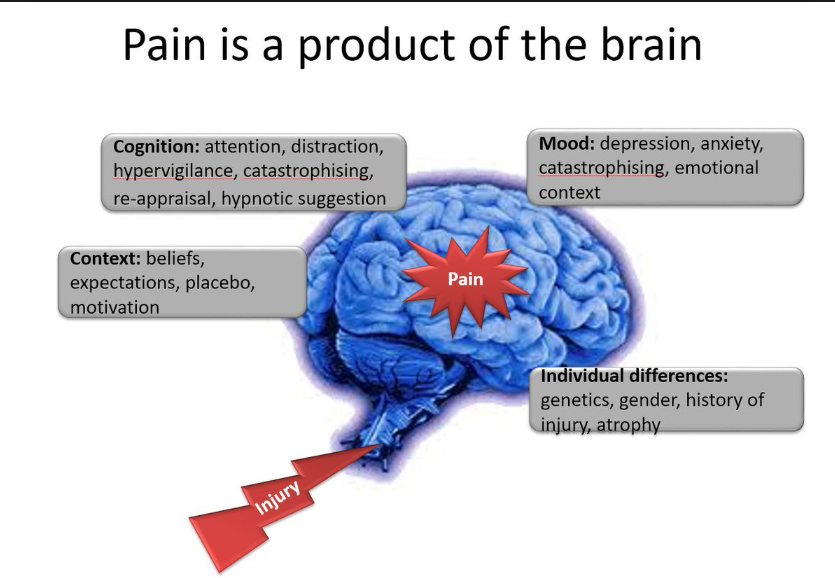
The Biopsychosocial approach is different and is influenced by the NEW Pain Science, where we now know that “Pain is in the brain.”

Jeremy has simplified shoulder issues into the following:

The diagnosis of a painful shoulder has been divided into 4 inter-related categories:

Not a Shoulder

Weak and Painful

Stiff and Painful

Unstable "Wobbly"


With 4 pre-disposing factors:

Psychosocial

Biomechanics

Lifestyle

Kinetic Chain


The evidence for Exercises prescribed by a Physiotherapist are as good as Surgery for the shoulder.

Physio is not "second best" treatment, but should be first line treatment, before surgery is considered (in a number of non-trauma cases).

This means that Physio can significantly reduce the number of surgeries on an already over-burdened NHS service.


You can contact Jeremy on Twitter:


Jeremy, the Bulletproofbodies Team salute you.


Video: https://www.youtube.com/watch?v=5bUf9VcYLmI


Wednesday, 1 November 2017

What is Shoulder Symptom Modification Procedure?


Shoulder Symptom Modification Procedure is a new approach to treating “mechanical shoulder pain” which is particularly useful to our athletic community with activities like CrossFit.

You were introduced to Dr Jeremy Lewis in yesterday’s blog. He described shoulder impingement syndrome as a “cluster of symptoms” rather than a specific diagnosis.

These include:

Rotator cuff pathology

Scapula dyskinesis

Shoulder instability

Biceps pathology

SLAP lesion

GIRD (Gleno-Humeral Internal Rotation Deficit)

Impingement can be external (Type 3 Hooked Acromion) or internal (Rotator cuff between the humeral head and the glenoid rim.

Internal Impingement can be further divided into:
 Anterior-Superior – Gleno-humeral joint – Shoulder flexion with internal rotation (back swing on ring muscle ups).


Posterior-Superior – Gleno-humeral joint – External Rotation with horizontal abduction (overhead throw).


What is the movement that the athlete is having trouble with?

Symptom modification = Pain reduction

The 4 stage process then begins:

1.     Thoracic Spine Modification (Kyphosis or lack of extension)

2.     Scapula position Modification

3.     Gleno-Humeral Joint Modification


4.     Cervical Spine Modification


What is the movement that the athlete is having trouble with?

Symptom modification = Pain reduction


The 4 stage Symptom Modification process then begins:

1.     Thoracic Spine Modification (Kyphosis or lack of extension)

2.     Scapula position Modification

3.     Gleno-Humeral Joint Modification

4.     Cervical Spine Modification

1. Treatment for the Thoracic spine could include postural awareness and correction assisted by taping, Thoracic extension exercises, Thoracic rotation exercises

2.  Treatment for the Scapula position could include taping the scapula into a new starting position before the movement begins

3.     Treatment for the gleno-humeral joint could include
The external rotation contraction against a theraband, followed by shoulder flexion (if that is the painful movement)

4.  Treatment for the Cervical spine could include taping into a more optimal position, working on the isometric strength of the cervical spine re-tractors, range of movement exercises.


We are looking for a 30% change in pain for each part of the modification for this to be meaningful and your athlete to notice a change.

So some food for thought with Symptom Modification using the above information.