“Men who could get through 40 or more push-ups had 96 percent less risk of heart problems in the next 10 years than those who quit at 10 or fewer.”
A new 10 year longitudinal study Published by Yang et al (2019) in the Journal Of American Medical Association JAMA Network
Men who can
breeze through 40 push-ups in a single exercise session are substantially less
likely to experience a heart attack or other cardiovascular problem in
subsequent years than men who can complete 10 or fewer.
The results suggest
that push-up ability might be a simple, reliable and D.I.Y.-in-your-living-room
method of assessing heart health, while at the same time helpfully
strengthening the triceps and pectorals.
As almost all of us
know, cardiovascular disease is the most common cause of death globally. Heart
attacks and strokes also lead to considerable disability, lost work time and
otherwise circumscribed lives and abilities.
But avoiding or
treating cardiovascular disease requires recognizing that it might have begun
or is on the horizon. Many medical tests of heart health, however, such as
treadmill exercise-stress testing or heart scans, are expensive and complicated
and can be difficult to interpret.
Many of these tests
also generally are designed to pick up heart disease after it has started, not
to predict the likelihood that it might develop. Meanwhile, mathematical risk
scores that evaluate information about a person’s weight, cholesterol profile,
smoking history and other health data are predictive, but in a way that is
broad, impersonal and abstract.
Doctors and the rest
of us who rely on our hearts have had little ability to evaluate cardiovascular
health and the risk for future problems in a simple, scientifically valid,
personalized and visceral way.
That void prompted
researchers at Harvard University, Indiana University and other institutions recently
to consider the health and fitness of a group of more than 1,500 Indiana
firefighters.
The firefighters reported each year to a single clinic in Indiana
for a medical checkup that included the standard assessments of each
firefighter’s weight, cholesterol, blood sugar and other health data. They also
completed a sub-maximal treadmill stress test that estimated their current
endurance capacity.
The researchers
originally were most interested in that last measurement. Plenty of past
studies have linked high aerobic fitness with a reduced risk for later heart
disease and vice versa. The researchers thought that they might be able to
quantify how well the treadmill test predicted future heart problems by using
the database of firefighters’ health information.
So, they gathered
information about each man’s stress test results — few women were working as
career firefighters in this group, so only men were included. They also
recorded any cardiovascular problems reported to or uncovered by clinic
physicians in the 10 years after each firefighter’s first appointment. The data
about heart problems was fairly comprehensive, since the firefighters needed
their physician’s approval to return to work after even minor heart concerns.
The researchers planned
to compare stress test results to subsequent cardiovascular problems to get a
sense of how prescient the treadmill testing might be.
Then, almost
incidentally, the researchers noticed that more than 1,100 of the firefighters
also had completed push-up tests during their yearly exams.
That testing had
been bracingly analog: a clinic staffer counted how many push-ups each man
could complete before his arms gave out or he reached 80 and was told he could
quit showing off and stop.
Since they had the
push-up data, the researchers slipped it in as a second data set in their
examination of current fitness and later heart problems, categorizing the men
by how many push-ups they could complete: zero to 10; 11 to 20; 21 to 30; 31 to
40; and 40-plus.
They then crunched the data.
To everyone's surprise,
push-up capability proved to be a better predictor, statistically, of future
heart problems than the sub-maximal treadmill tests.
Men who could complete
at least 11 push-ups had less risk of developing heart problems in the
following decade than those who could complete fewer than 10, they found.
This risk reduction
mounted impressively at the highest level of push-up ability.
Those men who
could get through 40 or more push-ups had 96 percent less risk of heart
problems in the next 10 years than those who quit at 10 or fewer.
The findings suggest
that push-up capability might be an easy-to-use marker of cardiovascular
disease risks, the researchers concluded, at least in men who resemble the
firefighters.
Of course, this study
was observational. It can show that more push-ups are linked with fewer heart
problems, but not that arm strength directly improves heart health or whether
becoming able to do more push-ups will drop the risk for heart problems over time.
It also cannot tell us how the two might be linked.
Push-up proficiency
probably also indicates an interest in healthy eating, regular exercise and
normal weight, he says, all of which could contribute to stronger hearts.
Best of all, push-up
testing is simple, requiring only the ability to count. If that count should
end before 10, however, you may want to talk to your doctor or a trainer about
how to increase your fitness and strength and perhaps better protect your
heart.
Could push-ups foretell the future and the state of a person’s heart?
The Bulletproofbodies Team Salute the Authors of this study.
If you are a regular
reader of this Blog then I am preaching to the converted.
However, I would like
you to give this short but important video to your friends and family who you
know are not getting enough physical activity in their lives.
For investment of just
22-30 minutes per day (which adds up to just over 150 hours per week) you can
keep away from the World's number one preventable killer, lack of
Cardio-Respiratory Fitness.
Which is statistically the strongest predictor of
premature death.
In addition, if you are more physically active, then your likelihood of having of of the other top 5 diseases also decreases, so it is win/win.
Now this physical
activity does not even have to be done in one go!
Three lots of 10 mins,
morning, lunch and evening.
We call this "snacking on exercise."
Even if you get your 30 mins of activity, it is still unwise to be in the same position for too long.
Sitting disease
includes watching a screen for 5 or more hours daily.
Who doesn't use a computer for work these days?
Why not try a standing desk and alternate positions every 30 mins?
Your challenge is:
Can you limit your
sleeping and sitting to just 23.5 hours day?
Last weekend the
Bulletproofbodies Team had the pleasure of studying with a true pioneer in Physiotherapy, Professor Dr
Jeremy Lewis.
Jeremy is a Physio that specializes in the Shoulder and has published extensively in the literature, he
is also the Editor of Grieve’s Modern Musculoskeletal Physiotherapy.
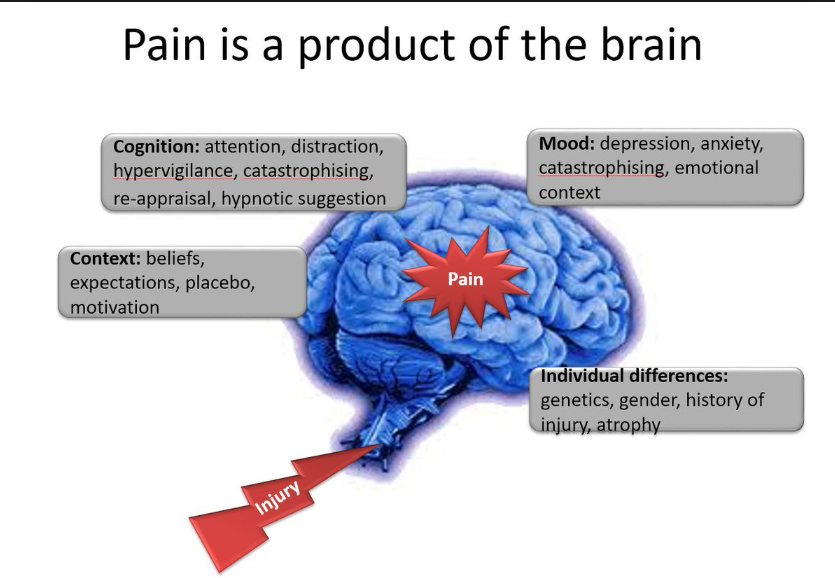
The Bio-Psycho-Social
approach has long been used in Physiotherapy and it is the exact opposite of
the Bio-medical model.
The bio-medical model
is the belief that the pain is coming from noxious “issues in the tissues.”
The Biopsychosocial
approach is different and is influenced by the NEW Pain Science, where we now
know that “Pain is in the brain.”
Jeremy has simplified shoulder issues into the following:
The diagnosis of a
painful shoulder has been divided into 4 inter-related categories:
Not a Shoulder
Weak and Painful
Stiff and Painful
Unstable "Wobbly"
With 4 pre-disposing factors:
Psychosocial
Biomechanics
Lifestyle
Kinetic Chain
The evidence for Exercises
prescribed by a Physiotherapist are as good as Surgery for the shoulder.
Physio is not "second best" treatment, but should be first line treatment, before surgery is considered (in a number of non-trauma cases).
This means that Physio can significantly reduce the number of surgeries on an already over-burdened NHS service.
Barefoot running shoes
brand Vivobarefoot have released a short documentary named Shoespiracy, which
looks at how modern footwear giants are producing shoes that are ruining the
nation's feet.
Watch the Shoespiracy
video which will challenge you to think differently about your shoes and the
negative effects your footwear is having on your feet, the way you move and
ultimately your health.
The four-minute film
speaks to former footwear innovators, Harvard professors, BBC doctors and
medical leaders, and shines a light on how the shoes we wear affect how we
move.
The mini-documentary
has the sell line of “there is a 20-billion-pair-a-year silent public health
scandal afoot - and it is shoe shaped!”.
Filmed in partnership
with Fable Films, it takes viewers on a journey which looks at the evolution of
functional footwear, and the jogging boom of the 1970s, that saw the birth of
the running footwear we know today.
The documentary focuses
on the cushioning and support offered by modern shoes, and asks whether it’s
actually doing more harm than good. Professor Irene Davis, department of
physical medicine and rehabilitation at Harvard Medical School says:
“I think
one of the causes of weak feet is the chronic support that we have from modern
footwear. The advances in technology have simply interfered with, rather than
helped, the foot.”
Vivobarefoot co-found
Galahad Clark said:
“It’s astonishing to us that the vast majority of shoes
produced each year are actually bad for your feet—and the wearers are none the
wiser.“
A number of leading shoe company bosses have often said to me:
‘I know
the science and agree with your philosophy, but, the consumer isn’t ready’.
“We believe people are
absolutely ready to start feeling better and moving more.”
VIVO Barefoot, the Bulletproofbodies Team Salute you.
Soleus provides the
greatest upward mass centre acceleration at all running speeds;
Soleus
generates a peak upward acceleration of 19.8 m/s2
(i.e., the equivalent of
approximately 2.0 bodyweights of ground reaction force) at 5.0 m/s.
Soleus also provided
the greatest contribution to forward mass centre acceleration, which increased
from 2.5 m/s2 at 2.0 m/s to 4.0 m/s2 at 5.0 m/s.
Soleus was the largest
contributor to upward mass center acceleration with a peak contribution at 5.0
m/s that was 77% of total peak upward acceleration.
The large upward mass
center acceleration from soleus arose because the muscle force produced a large
vertical ground reaction force of approximately 2 bodyweights.
Peak contributions from
soleus to upward mass center acceleration increased by 5.7 m/s2 across running
speeds.
So what does this mean?
Quite simply, you need to start isolation training of the Soleus, which is shown in the video above.
Exercises such as bent-knee calf raises,
plyometric drills such as Box jumps (Concentric muscle action) and Landing from the box (Eccentric muscle action).
In addition, the Sled Push is a great functional way to work Soleus as you go from isolation into integration.
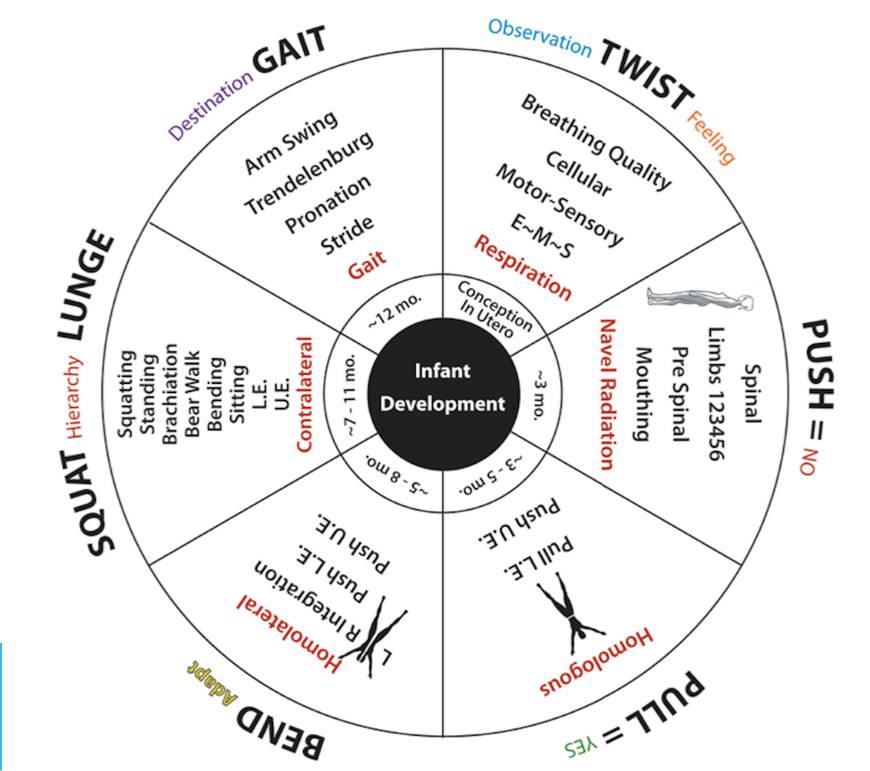
The British Army is changing more in the last 2 years than in the last 200! New Fitness tests and training based on Science from the University of Chichester, Women in ground close combat and the new integrated Virtus Equipment are changing the way the Army does business. This week at Bulletproofbodies, we have been tracing back to the originator of making Functional Movement popular, Paul Chek. We delivered a presentation on how the British Army has now changed to a Functional Movement Type of training and the fact that Women will be going into the Infantry for the first time in the history of the British Army.
This type of training has been championed from the CHEK Institute for the last 20 years.
Training Functional Movements or as the CHEK Institute calls them, Primal Patterns is important in order to make sure you are training in all 3 planes of movement.
In addition, the Army is now emphasizing POWER training rather than just muscular endurance.
Now the British Army has changed not only its Physical Training Methods, but also its Personal Fitness Assessment.
Now known as PES Physical Employment Standards.
The 2 minutes of Press Ups, Sit Ups and 1.5 mile run are about to be changed forever!
Everything will be more functional and related to task specific fitness.
If you want to recover faster between Functional Movement training sessions, then use Compex: