Welcome Video

Thursday, 16 May 2019

AcroYoga Solar Asana with Cheat Sheet


After the Acro Yoga Workshop, Bulletproofbodies continue with our Yoga based theme.

This video is from Jason Nemer and the Acro Yoga International Team.

This is the perfect preparation for Acro Yoga.


Try the sequence and see how it feels to you!


Here is your cheat sheet for this particular flow. Enjoy!

1. Centering: R heart, L belly 3x B
2. Kali Mudra stretch
EX: lean R // IN: overhead // EX: lean L // IN: center & back
3. EX: T position
IN: Cactus Arch // EX: Hollow -- 3x
4. EX: Maha Bhanda (hands to thighs)
5. IN: Handstand Mudra
6. EX: Fwd Fold // IN: lift -- 3x
7. Plank 3xB
8. DDog 3xB
9. Tabletop w/ elbow articulation 3xB
10. Cat/Cow 3x
11. DDog w/ elbow articulation 3x
12. DDog w/ Arch/Hollow 3x
13. Float Fwd & Fold 3x

LUNGE SEQUENCE:
14. R foot steps back to HOLLOW LUNGE
15. --Integrate Shoulders
16. --Handstand mudra
16. PLANK TIGHTNESS Shoulder taps 7x
17. Knee pushup 3-5x
18. Child's pose
19. slide through to Sphinx w/ Arch/Hollow 3x
20. press to Forearm Plank, 3xB
21. Sphinx, 3xB
22. DDog push ups, 3-5x
23. Step R foot fwd to HOLLOW LUNGE
24. --Integrate Shoulders
25. --Handstand mudra
26. PLANK TIGHTNESS Shoulder taps 7x
27. Plank pushup 3-5x
28. Child's pose
29. Cobra, 3xB
30. Locust, 3xB (fingers interlaced)
31. Front Bird, 3xB (hands to side & legs raise)
32. DDog push up, 3x

WARRIOR SEQUENCE:
33. L leg fwd to WARRIOR 1
34. Spotter’s Stance
35. Leg presses, IN: bend // EX: Extend (Spine Straight) 3x
36. Turn RIGHT to Goddess
37. IN: extend arms out for strength, EX: draw power in to core 3x
38. Goddess Squats 3x
39. Prasarita Padottanasana 3xB
40. IN: Turn RIGHT Leg FWD to BACK OF ROOM WARRIOR 1
41. Spotter’s Stance
42. Leg presses, IN: bend // EX: Extend (Spine Straight) 3x

INVERSION / ARM BALANCING:
43. Exhale to DDog
44. Utadogana to Tuck Jumps 3x
45. Sirsana Headstand Tuck Press 3x
46. Child's Pose 3xB
47. Crow
48. Vinyasa
49. Jump through to SEATED PIKE
50. Stag (both sides)
51. Pike stretch extension
52. Tuck rocks 3x
53. Tuck ups 3x
54. Shoulder stand
55. Roll fwd to Utadogana
56. Hollow body hops 5 fwd/back
57. Wrist Stretch, 3x
58. Plank
59. Lower to Thigh Stretch (Half frog)
60. Bow
61. Child’s Pose
62. DDog
63. Dolphin (Forearm) L Hops 3x
64. Heart Opener / Anahata
65. DDog

TWISTS & LEGS:
66. IN: step L foot FWD to TWISTED LUNGE 3xB
67. Bend back R knee for TWISTED THIGH STRETCH
68. Lizard
69. Runner’s Lunge . Half Hanuman
70. Half Moon / Ardha Chandrasna
71. Vertical Split on L foot
72. Turn R to Side Lunge / Skandasana
73. IN: R foot FWD to TWISTED LUNGE 3xB
--TURN to FRONT OF ROOM--
74. Bend back L knee for TWISTED THIGH STRETCH
75. Lizard
76. Runner’s Lunge . Half Hanuman
77. Half Moon / Ardha Chandrasna
78. Vertical Split on L foot
79. TURN Left into Goddess
80. Spinal Traction 3xB
81. Straddle Jumping Jacks 5x
82. Tripod Headstand Straddle Press
83. Seated Straddle / Upavishta

CLOSING SEQUENCE:
84. Bend R knee, Janusirsana on L leg (back of room)
85. --side bend
86. --fwd fold
87. Turn to Pigeon on bent R leg (face front)
88. Rotate to Janu on R leg w/ bent L knee
90. --side bend
91. --fwd fold
92. Turn to Pigeon R leg (face back)
93. Piked Straddle Stretch 3xB
94. Swing L leg to FRONT (R) for Pike stretch extension
95. Hollow body rocks
96. V-ups
97. Shoulderstand
98. Utadogana
99. Kick Switches, both sides 3x
100. Fwd Fold / Uttanasana
101. IN: Arms up to Handstand Mudra

102. Closing

Video: https://www.youtube.com/channel/UC5R6ilcqa27_9hGjutBNx0g

https://www.alomoves.com/series/acroyoga-solo-strength-practices/workouts/4410


Friday, 10 May 2019

Are You Fit Enough For Acro Yoga?


Last week the Bulletproofbodies Team were back in London for the Acro Yoga Solar Immersion.


Our expert Instructors were Jaqui and Pascal.

The video above was the prerequisites for the course.

Would you be fit enough to do Acro Yoga?

But Firstly, what is Acro Yoga? 


Acroyoga is a Yoga practice that combines the dynamic wisdom of acrobatics, the awareness, breath and balance of yoga and the healing, loving nature of Thai massage. Working with one or more partners these three disciplines are fused into spectacular sequences of inversions, flows and balances.

It’s a community practice, which, at it’s simplest, means that you are working with other people. In this way we can practice developing trust, connection and openness which can then be taken into the community as a whole. In AcroYoga, the smallest community is 3 people covering the 3 main roles of base, flyer and spotter.

The base is essentially the one on the bottom supporting the weight of the flyer. The spotter’s primary role is to ensure the safety of the base and flyer and can act as coach and assistant to help the pair through tricky transitions.

The two main energies in AcroYoga are the Solar which reflects the more fiery acrobatic side and the Lunar which embodies the more therapeutic and healing aspect. The acrobatic side takes strength, balance and determination while the therapeutic is side encourages opening, releasing and listening.

AcroYoga is an exhilarating and open ended practice. It leads towards hard to achieve asana positions such as scorpion, headstands and handstands. It deepens backbends, lengthens hamstrings and opens hips, as well as an endless array of flying positions that no-one has thought of a name for yet.


Solar Immersion Workshop

Solar Acrobatic Immersions are designed to train us in the art of training acrobatics safely, using progressive skill building and effective spotting methods. 

We learned to co-create a safe environment and deepen our capacity to trust ourselves and others. 

Paving the way for more collaborative and advanced acrobatics regardless of what level you were previously.

We developed strength, increased confidence, training smarter techniques and developed habits that will support our achievement for a lifetime of Acro Yoga.


Trust in your spotter is paramount if you want to start doing moves that could lead to an injury. 

What better way to do this then the classic fall back and we will catch you!


If you have not tried Acro Yoga yet, what are you waiting for?

Check out their website on the link below:


Video: https://www.youtube.com/watch?v=nUxIyCJrOtQ


Friday, 3 May 2019

RockBlades - Bulletproofbodies get Certified with RockTape


Last weekend the Bulletproofbodies Team were on the Rockblades Course getting certified with Osteopath Mike Grice, at Active Health in Manchester.


We have been using Rockblades for years but it was finally time to get certified.

Rockblades are the future of IASTM (Instrument Assisted Soft Tissue Massage).

Every detail of RockBlades—each edge, angle, and contour, was carefully cultivated and refined over the course of two years.

RockBlades are comprised of two precision-engineered and manufactured soft-tissue instruments: a surgical-grade stainless steel “Mallet” and thermo-plastic polymide “Mullet,” accompanied by a 100% natural RockRub emollient and sanitising wipes to form a complete, turn-key IASTM system.

RockBlades are sold as a complete IASTM solution - 1 Mallet, 1 Mullet, a 50g RockRub Jar and a pack of sanitizing wipes. They're housed in a reusable docking station made of high quality plastic that can be washed and used to store the tools for use and display.


The Mallet

Honed from surgical-grade stainless steel, the Mallet is the ultimate in-clinic tool. Hand-polished treatment surfaces, combined with a perfectly balanced and weighted core make tissue scanning and treatment a breeze. Matte-finished dimples—four on each side—combined with a patented "brass knuckle" style handle enables practitioners to hold the tool six different ways. Every side is unique - both in shape and edge radius. The non-treatment faces of the Mallet are laser-etched with RockTape's awesome manifesto design.


The Mullet

The “Mullet” is a lightweight tool designed to be portable, allowing practitioners to deliver superior soft-tissue manipulation wherever their patients may be. The Mullet is crafted from an incredibly durable thermo-plastic polyamide—the same material is used in high-performance automotive and aerospace applications. The Mullet features four distinct edges, providing comprehensive treatment capabilities and its quirks include a functioning bottle opener. The non-treatment faces of the Mullet are chemically-etched with RockTape's awesome manifesto design.

The Mohawk

The "Mohawk" is a revolutionary system featuring 3 tools in one, Mohawk enables you to treat a wide range of pain, mobility and neurological issues with one precision-crafted stainless steel tool and two unique, patent-pending attachments.


But beyond the certificate was some amazing teaching and sharing of techniques.
Combined with an excellent handout containing some great pictures and messages.


People on the course were from a mixture of backgrounds from Physiotherapy, Sports Rehabilitation, Sports Therapy and Massage Therapy.
Basically, all from the big Therapy family.

If you want to get money off Rocktape products or find out where we are next visit the website below:


Use the Bulletproofbodies discount code:

Dale 01


Rocktape, the Bulletproofbodies Team salute you.

Video: https://www.youtube.com/watch?time_continue=89&v=0wMHN7c2JfY


Thursday, 18 April 2019

Bulletproof Your Knees (with this quick routine)


Bulletproof Knees


If you are an extreme athlete, then you value this rotational hinge joint.

First of all.

A little bit of knee anatomy.


The knee is one of the largest and most complex joints in the body. 

The knee joins the thigh bone (femur) to the shin bone (tibia). 

The smaller bone that runs alongside the tibia (fibula) and the kneecap (patella) are the other bones that make the knee joint.

Tendons connect the knee bones to the leg muscles that move the knee joint. Ligaments join the knee bones and provide stability to the knee:

The anterior cruciate ligament prevents the femur from sliding backward on the tibia (or the tibia sliding forward on the femur).

The posterior cruciate ligament prevents the femur from sliding forward on the tibia (or the tibia from sliding backward on the femur).

The medial and lateral collateral ligaments prevent the femur from sliding side to side.

Two C-shaped pieces of cartilage called the medial and lateral menisci act as shock absorbers between the femur and tibia. 

Numerous bursae, or fluid-filled sacs, help the knee move smoothly.


One athlete shares his experience with exercise rather than surgery.

Try this Power of Four Routine:

1. Foam Roll Laterally

2. Poloquin Step Ups

3. Single Leg Calf Raises

4. Knee Circles

Why are you still using a normal Foam Roller when you could be using Pulseroll.


Use the discount code:

DALE1


Video: https://www.youtube.com/user/strengthsidetrainer

Tuesday, 16 April 2019

Could You Do 40 Push-Ups If Your life Depended on it?


“Men who could get through 40 or more push-ups had 96 percent less risk of heart problems in the next 10 years than those who quit at 10 or fewer.”

A new 10 year longitudinal study Published by Yang et al (2019) in the Journal Of American Medical Association JAMA Network

 Men who can breeze through 40 push-ups in a single exercise session are substantially less likely to experience a heart attack or other cardiovascular problem in subsequent years than men who can complete 10 or fewer. 

The results suggest that push-up ability might be a simple, reliable and D.I.Y.-in-your-living-room method of assessing heart health, while at the same time helpfully strengthening the triceps and pectorals.

As almost all of us know, cardiovascular disease is the most common cause of death globally. Heart attacks and strokes also lead to considerable disability, lost work time and otherwise circumscribed lives and abilities.

But avoiding or treating cardiovascular disease requires recognizing that it might have begun or is on the horizon. Many medical tests of heart health, however, such as treadmill exercise-stress testing or heart scans, are expensive and complicated and can be difficult to interpret.

Many of these tests also generally are designed to pick up heart disease after it has started, not to predict the likelihood that it might develop. Meanwhile, mathematical risk scores that evaluate information about a person’s weight, cholesterol profile, smoking history and other health data are predictive, but in a way that is broad, impersonal and abstract.

Doctors and the rest of us who rely on our hearts have had little ability to evaluate cardiovascular health and the risk for future problems in a simple, scientifically valid, personalized and visceral way.

That void prompted researchers at Harvard University, Indiana University and other institutions recently to consider the health and fitness of a group of more than 1,500 Indiana firefighters. 

The firefighters reported each year to a single clinic in Indiana for a medical checkup that included the standard assessments of each firefighter’s weight, cholesterol, blood sugar and other health data. They also completed a sub-maximal treadmill stress test that estimated their current endurance capacity.


The researchers originally were most interested in that last measurement. Plenty of past studies have linked high aerobic fitness with a reduced risk for later heart disease and vice versa. The researchers thought that they might be able to quantify how well the treadmill test predicted future heart problems by using the database of firefighters’ health information.

So, they gathered information about each man’s stress test results — few women were working as career firefighters in this group, so only men were included. They also recorded any cardiovascular problems reported to or uncovered by clinic physicians in the 10 years after each firefighter’s first appointment. The data about heart problems was fairly comprehensive, since the firefighters needed their physician’s approval to return to work after even minor heart concerns.

The researchers planned to compare stress test results to subsequent cardiovascular problems to get a sense of how prescient the treadmill testing might be.

Then, almost incidentally, the researchers noticed that more than 1,100 of the firefighters also had completed push-up tests during their yearly exams. 

That testing had been bracingly analog: a clinic staffer counted how many push-ups each man could complete before his arms gave out or he reached 80 and was told he could quit showing off and stop.

Since they had the push-up data, the researchers slipped it in as a second data set in their examination of current fitness and later heart problems, categorizing the men by how many push-ups they could complete: zero to 10; 11 to 20; 21 to 30; 31 to 40; and 40-plus.

They then crunched the data.


To everyone's surprise, push-up capability proved to be a better predictor, statistically, of future heart problems than the sub-maximal treadmill tests.

Men who could complete at least 11 push-ups had less risk of developing heart problems in the following decade than those who could complete fewer than 10, they found.

This risk reduction mounted impressively at the highest level of push-up ability.

 Those men who could get through 40 or more push-ups had 96 percent less risk of heart problems in the next 10 years than those who quit at 10 or fewer.

The findings suggest that push-up capability might be an easy-to-use marker of cardiovascular disease risks, the researchers concluded, at least in men who resemble the firefighters.

Of course, this study was observational. It can show that more push-ups are linked with fewer heart problems, but not that arm strength directly improves heart health or whether becoming able to do more push-ups will drop the risk for heart problems over time. It also cannot tell us how the two might be linked.


Push-up proficiency probably also indicates an interest in healthy eating, regular exercise and normal weight, he says, all of which could contribute to stronger hearts.

Best of all, push-up testing is simple, requiring only the ability to count. If that count should end before 10, however, you may want to talk to your doctor or a trainer about how to increase your fitness and strength and perhaps better protect your heart.


Could push-ups foretell the future and the state of a person’s heart?

The Bulletproofbodies Team Salute the Authors of this study.


https://www.nytimes.com/2019/02/20/well/move/how-many-push-ups-can-you-do-it-may-be-a-good-predictor-of-heart-health.html

Video: https://www.youtube.com/watch?v=-Mbr55h3BeQ

Monday, 15 April 2019

What is the single best Medicine we can take for our health?


If you are a regular reader of this Blog then I am preaching to the converted.

However, I would like you to give this short but important video to your friends and family who you know are not getting enough physical activity in their lives.

For investment of just 22-30 minutes per day (which adds up to just over 150 hours per week) you can keep away from the World's number one preventable killer, lack of Cardio-Respiratory Fitness. 

Which is statistically the strongest predictor of premature death.


In addition, if you are more physically active, then your likelihood of having of of the other top 5 diseases also decreases, so it is win/win.

Now this physical activity does not even have to be done in one go!

Three lots of 10 mins, morning, lunch and evening.

We call this "snacking on exercise."

Even if you get your 30 mins of activity, it is still unwise to be in the same position for too long.

Sitting disease includes watching a screen for 5 or more hours daily.

Who doesn't use a computer for work these days?

Why not try a standing desk and alternate positions every 30 mins?


Your challenge is:


Can you limit your sleeping and sitting to just 23.5 hours day?


Video: https://www.youtube.com/watch?v=aUaInS6HIGo


Tuesday, 9 April 2019

Exercise is as effective as surgery.


Last weekend the Bulletproofbodies Team had the pleasure of studying with a true pioneer in Physiotherapy, Professor Dr Jeremy Lewis.


Jeremy is a Physio that specializes in the Shoulder and has published extensively in the literature, he is also the Editor of Grieve’s Modern Musculoskeletal Physiotherapy.


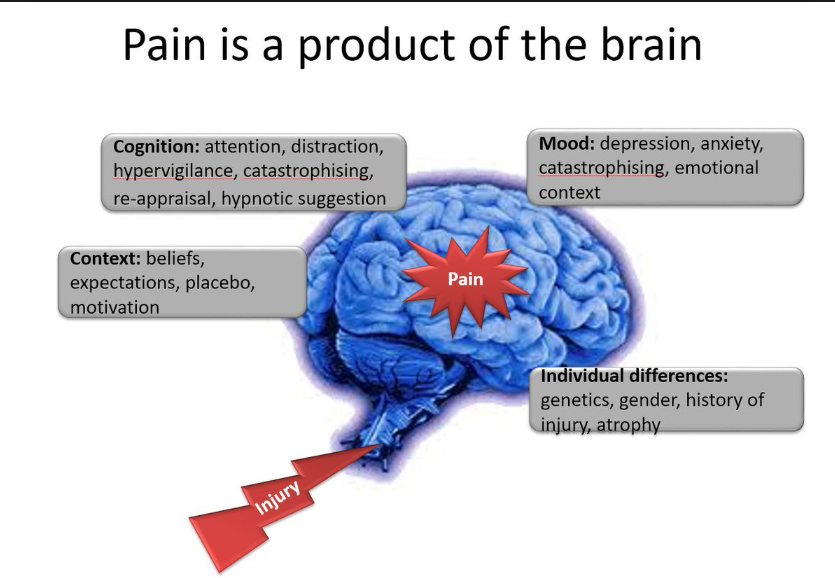
The Bio-Psycho-Social approach has long been used in Physiotherapy and it is the exact opposite of the Bio-medical model.

The bio-medical model is the belief that the pain is coming from noxious “issues in the tissues.”

The Biopsychosocial approach is different and is influenced by the NEW Pain Science, where we now know that “Pain is in the brain.”


Jeremy has simplified shoulder issues into the following:

The diagnosis of a painful shoulder has been divided into 4 inter-related categories:

Not a Shoulder

Weak and Painful

Stiff and Painful

Unstable "Wobbly"


With 4 pre-disposing factors:

Psychosocial

Biomechanics

Lifestyle

Kinetic Chain


The evidence for Exercises prescribed by a Physiotherapist are as good as Surgery for the shoulder.

Physio is not "second best" treatment, but should be first line treatment, before surgery is considered (in a number of non-trauma cases).

This means that Physio can significantly reduce the number of surgeries on an already over-burdened NHS service.


You can contact Jeremy on Twitter:


Jeremy, the Bulletproofbodies Team salute you.


Video: https://www.youtube.com/watch?v=5bUf9VcYLmI